
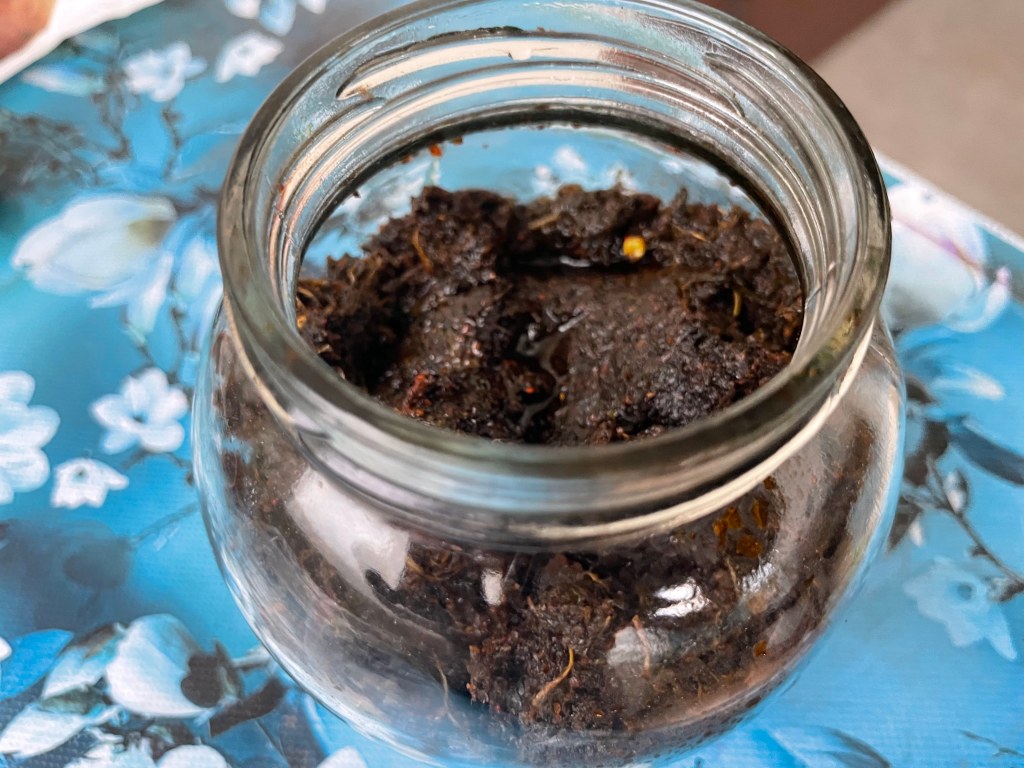
This can easily be said to be the identity of Andhra, claiming a super royal status in Telugu cuisine, along with Avakaya and kandipodi (gunpowder). Made using the tinglingly sour leaves of Gongura (Sorrel) leaves, this signature pickle is loved by every serious Andhrite☝️
There are actually two varieties of these gongura – called tella(white or green stemmed) gongura and erra(red) gongura. The red one is sharply tart while white one is milder. When we prepare this pachadi, we mix both varieties to get optimum flavor. Sometimes when we get only one variety we adjust the tamarind which is added in the recipe. I didn’t notice the difference in the taste and texture in these preparations as I am not a serious fan of this but I do like it.
When I say serious fans, definitely there are people who are so ritualistic – close to a cult, in savoring it. Freshly made gongura with hot rice, liberal helping of oil and chopped raw onion or shallots is divine, to many. Some have it with ghee and curd. Some with pappu and vadiyalu. Simple rice balls made by mixing rice with gongura pickle and oil are just droolsome.
The recipe for this pickle varies slightly with region. I am familiar with two prominent and opposing regions of Andhra namely Godavari and Krishna districts. There are lot of variations in food and other customs in these two regions and as can be expected, each hoity-toity about its ways. Amma is from Godavari jilla (East to be precise; east vs west is another 🙄) and Nannagaru from Krishna jilla. Right from accent one jibes the other. In our typical extremely patriarchal house, nannagaru alll..lways used to scoff at G practices while Amma meekly met all that with her typical non-committal, no, actually non-judgemental warmth and her reverence for him. G people are supposedly gentle with a sing-song prolonged drawl in their way of speaking while K people are curt with a rushed way of speaking. Amma balanced her innate G grooming with K style in food and other customs like most other women.
Anyway this gongura pickle is much more native to Krishna and Guntur districts than Godavari, afaik. Krishna people preserve the leaves by salting which is kept intact for months on. Whenever needed they take a small amount from it and prepare the pachadi. The same goes for Chintakaya (tender tamarind) and Usirikaya (gooseberry). Maybe some others also.
I only learnt Godavari style prep. Luckily my in-laws are Godavari too, like amma and ammamma which solved lot of problems for me. That too they belonged to the exact same school. (Like for eg, my elder cosister though from Rajahmundry, which is very Godavari, her school is quite different) I was never tempted to do anything in the Krishna style – same hoity-toitiness 😆 In the current internet era, we are experimenting many types, schools, rules, actually no rules 🥲
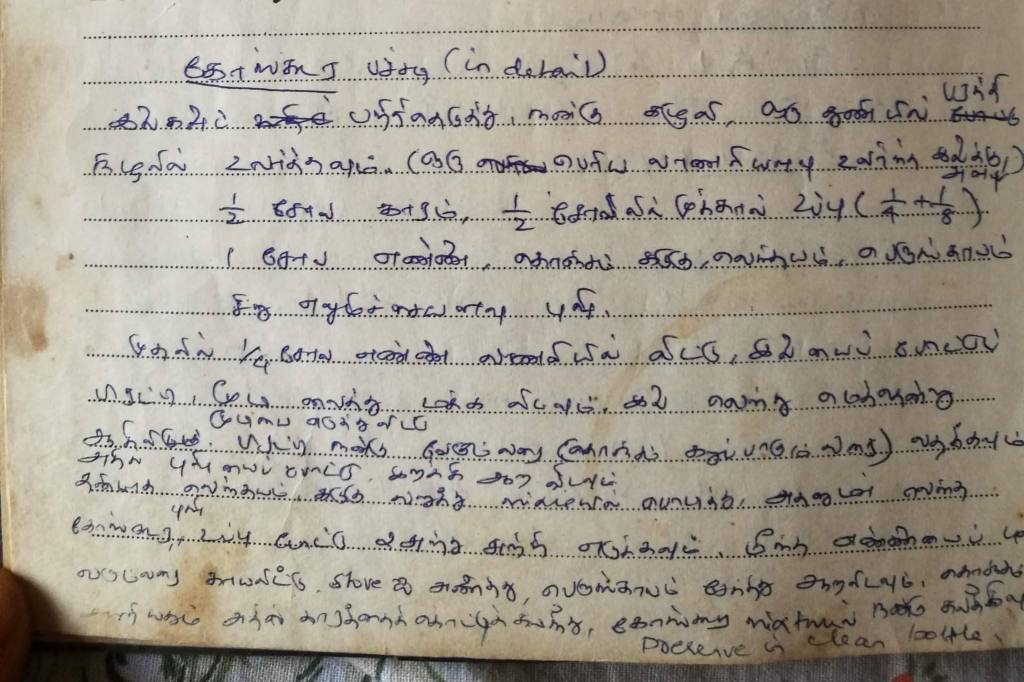
Ingredients:
- Gongura leaves – 10″ kadai full (3L,/ 200g roughly?) picked, washed and air-dried
- Chilly powder – 1/2 sola (Sola is app 1.5 cups)
- Salt – 3/8 sola (that is 3/4th of 1/2)
- Mustard – 3 tbsp
- Methi – 2.5 tbsp
- Red chilly – 3 or 4 (opt)
- Hing – liberal
- Tamarind – lemon size
- Gingelly oil – 1 sola
- Garlic cloves – 30 (opt)
Method:
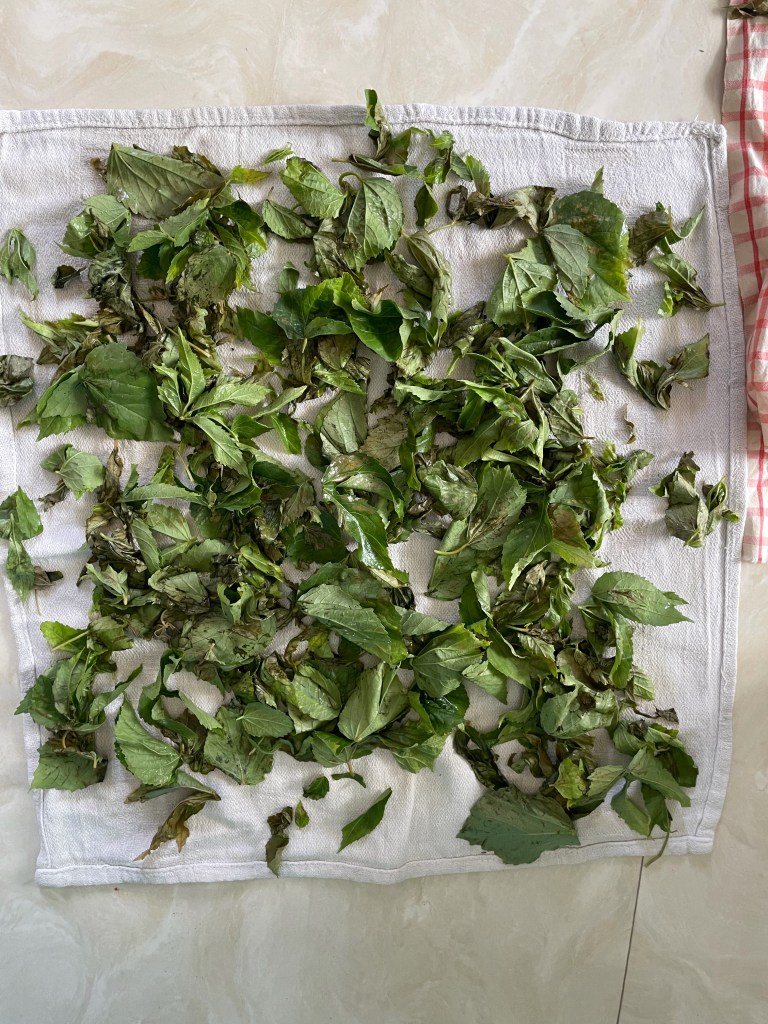
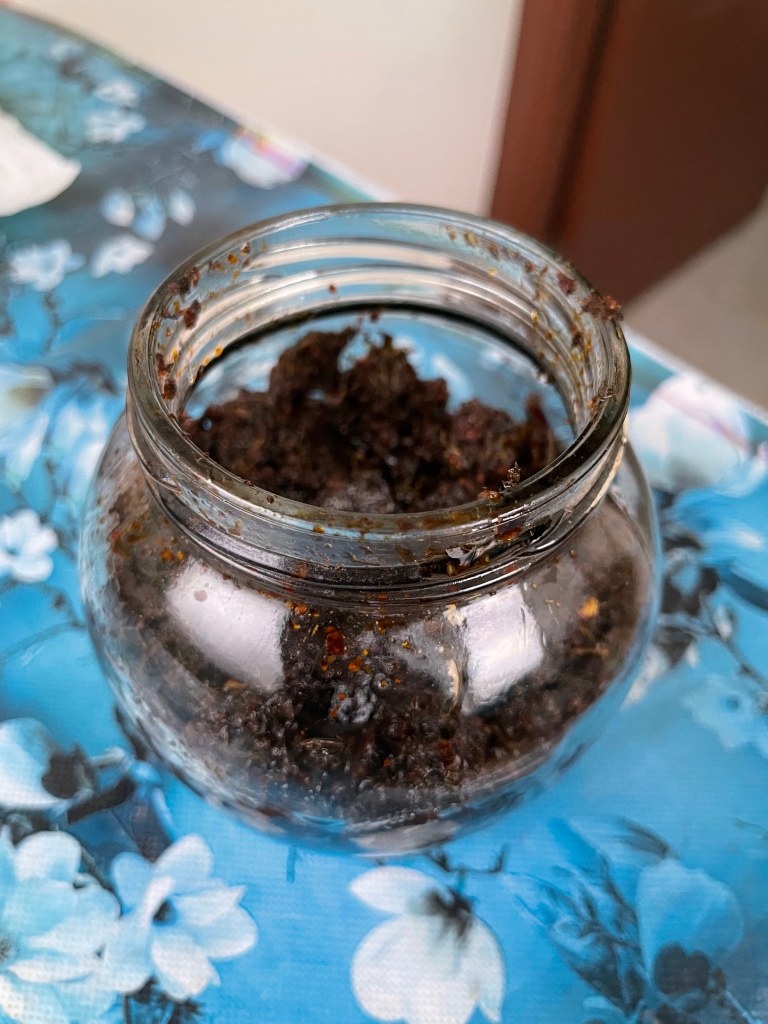
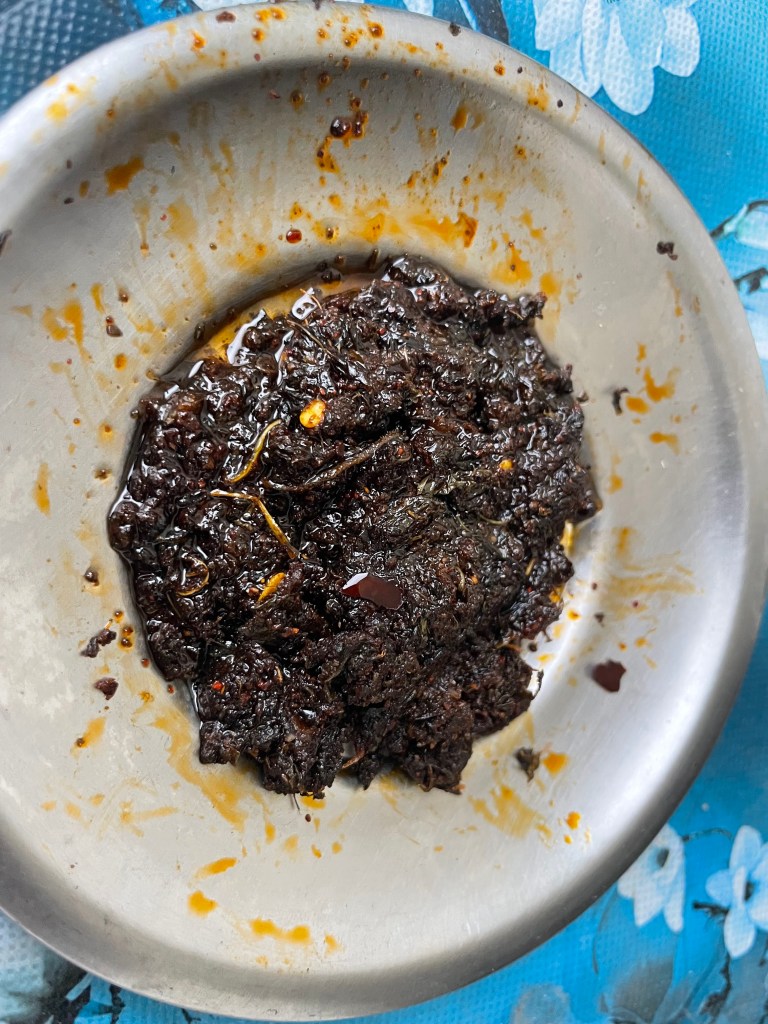
- Dry roast methi and mustard (and red chilly) in a pan until mustard pops and methi turns brown. Set aside to cool.
- Heat 3 tbsp of oil and add gongura leaves to it. Saute them for 2 minutes and cover with a lid and let the leaves soften for another 2, 3 minutes.
- Remove the lid, stir and saute till the leaves wilt and lose some of their moisture (and begin to get a dark colour).
- Add tamarind to this and switch off the heat. Let this cool.
- Grind roasted mustard, methi, chilly and tamarind to coarse powder.
- Add the sauteed leaves along with salt and grind to a coarse paste.
- Heat remaining oil in the pan until it smokes, add hing and turn off the heat.
- Once it cools down but still warm, add chilly powder and mix well.
- Add the ground mixture to this and mix thoroughly. Adjust oil as needed.
- If using garlic, heat some oil, shallow fry the garlic cloves until they brown here and there and add them to the pachadi.
Notes:
- Picking and cleaning is the tedious part in the preparation. Rest is simple. Best is to pick the leaves when they are fresh. Wash them well in running water and then keep them immersed in a pot of water with salt. Remove the leaves from the pot and empty the water and settled sand particles. Again take fresh water, soak the leaves and remove and drain in a colander. Spread the leaves on a clean cloth and let them dry in shade. Once all moisture is gone, use them for pachadi.
- We saute the leaves until it slightly gets dark which helps with preserving the pickle longer without refrigeration. Under-sauteed leaves spoil very soon. Amount of oil (lot) used also matters.
 A Spring in your Step