

Karivepaku (Curry leaves ) podi is another of the most popular podis of South India. For me, it is the number 1 favorite podi and number 2 of all my favorite foods, first being aha…aha mouthwatering uppu-vamu (salt + ajwain). They are both such soul foods, so yummy and light on the tummy. Third is appadala pindi which is so hot and spicy, it nicely purges the bowels!
Curry leaves are very extensively used in South India. I, for one, cannot live without them. That is one thing I always zealously hoard and also use up. Small, tender leaves smell and taste great. My SIL had 2 trees in their yard. We used to frequently visit them, atleast once in 2 weeks. Every time I would look for tender stems and get fresh stock. She would inspect the tree and effortlessly break a branch saying, only that will allow the tree to grow further freshly and destem them for easier packing in a plastic bag. So every now and then I make this kaarappodi and store. After couple of weeks it wont taste as good. So prepare accordingly.
For this kaarappodi leaves must be little more mature (why 🧐) than tender (not tough and fibrous – taste like mud🤢) I am a diehard fan of tender (also small) leaves. So it is hard for me to pick non-tender ones and I end up with a mix of both which makes roasting them harder.
I dont remember anything from childhood about my love of this, though I do recollect my obsession with uppu-vamu. But both uppu-vamu and karappodi were given to us in the ‘diet’ called ‘pachyam’ after recovering from fever or other sickness. And my sister and I used to get fever over and over until I turned 12 and she 10+ after we recovered from a ‘big typhoid’.
Those days fevers were a big fuss, – medicines, injections, strict diet for several days until the thermometer showed normal or sub-normal. Even the diet used to be bread toasted without fat and accompanied by sugar maybe or dry chapati or jawa (thin porridge), which used to taste yuck to the bitter tongue. We would crave for some tasty food, but no way. Sometimes we were given raisins as bribe for injection. I was always the brave one, never feared the syringe but my brother and sister were so scared of it.
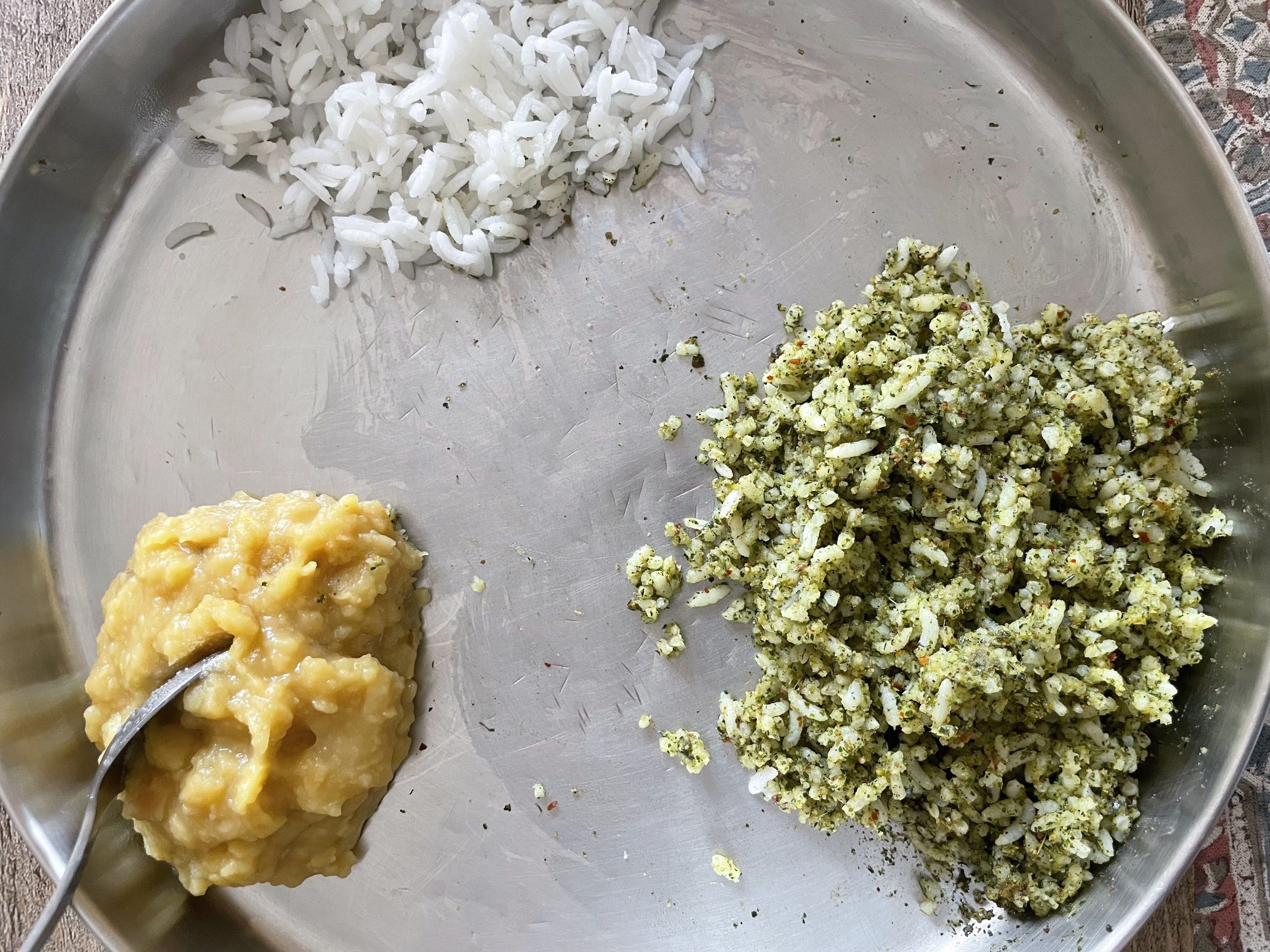
After the fever comes down, first day we would be given soft cooked broken-rice with rasam and milk. Next day soft-cooked lightly-roasted rice with karappodi, nimmakaya pickle and rasam and milk or curd. Some ritual like that…Having buttermilk was cautiously introduced. My God! how tough it would have been for amma. Nannagaru used to get worried too and would administer medicines and in some tough fevers he would take us in a horse-cart (why? we had car..🤔) to a pediatrician colleague of his. But amma had to do all the nursing, putting up with our tantrums, giving food, giving tepid-sponging if required (I used to develop high temperatures) and we used to get them very often. Our brother was better. My sister always used to get a fever if nannagaru went out of town. And we both used to get if went for second-show movie to a theater in the town outskirts. They toiled so much with us. We had no such troubles with our kids.. only occasional.
So this kaarappodi played a crucial role in remedying after-fever issues. Since it is rich in antioxidants and is easy to digest it was religiously used in the recovery.
My recipe for kaarappodi is from ammamma. I am (was) very strict with the ingredients and then measurement for traditional recipes, very rigid. I say, if you call it by that name it must follow that rule, or call it something else. Even now I prefer sticking to those rules. I strongly object to using chanadal in this recipe.
Karappodi is enjoyed as the first item of lunch with hot rice and generous amount of melted ghee. Tastes heavenly!
Ingredients:
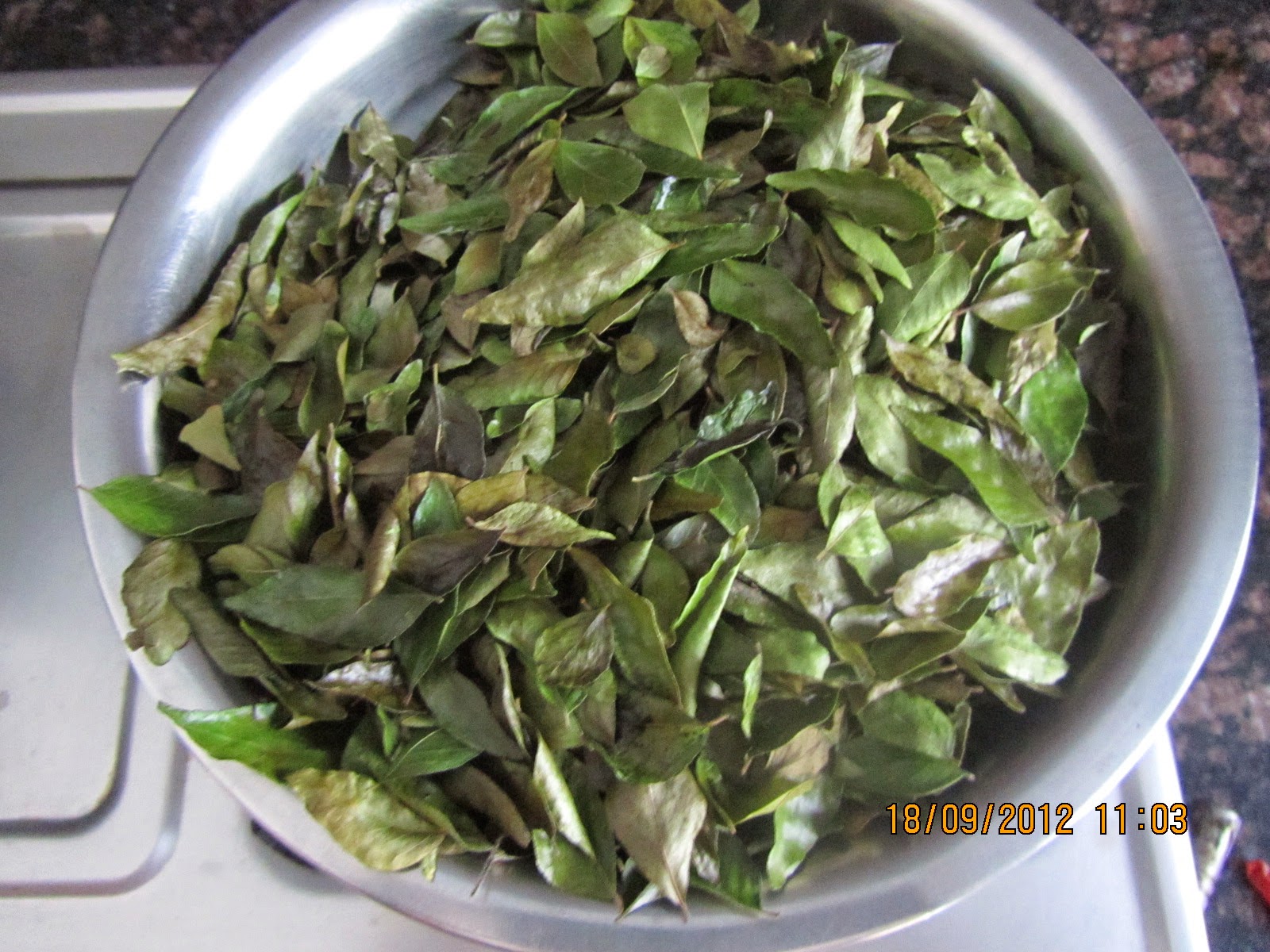
- Curry leaves – 4 cups, washed and dried in shade
- Urad dal – 2tbsp
- Coriander seeds – 2tbsp
- Cumin – 1 tsp
- Red chilly – 4 to 6
- Tamarind – gooseberry sized tightly packed
- Salt
- Oil – 1 tbsp

Method:
- Wash the curry leaves in water and spread on clean cloth overnight or until they are completely dry.
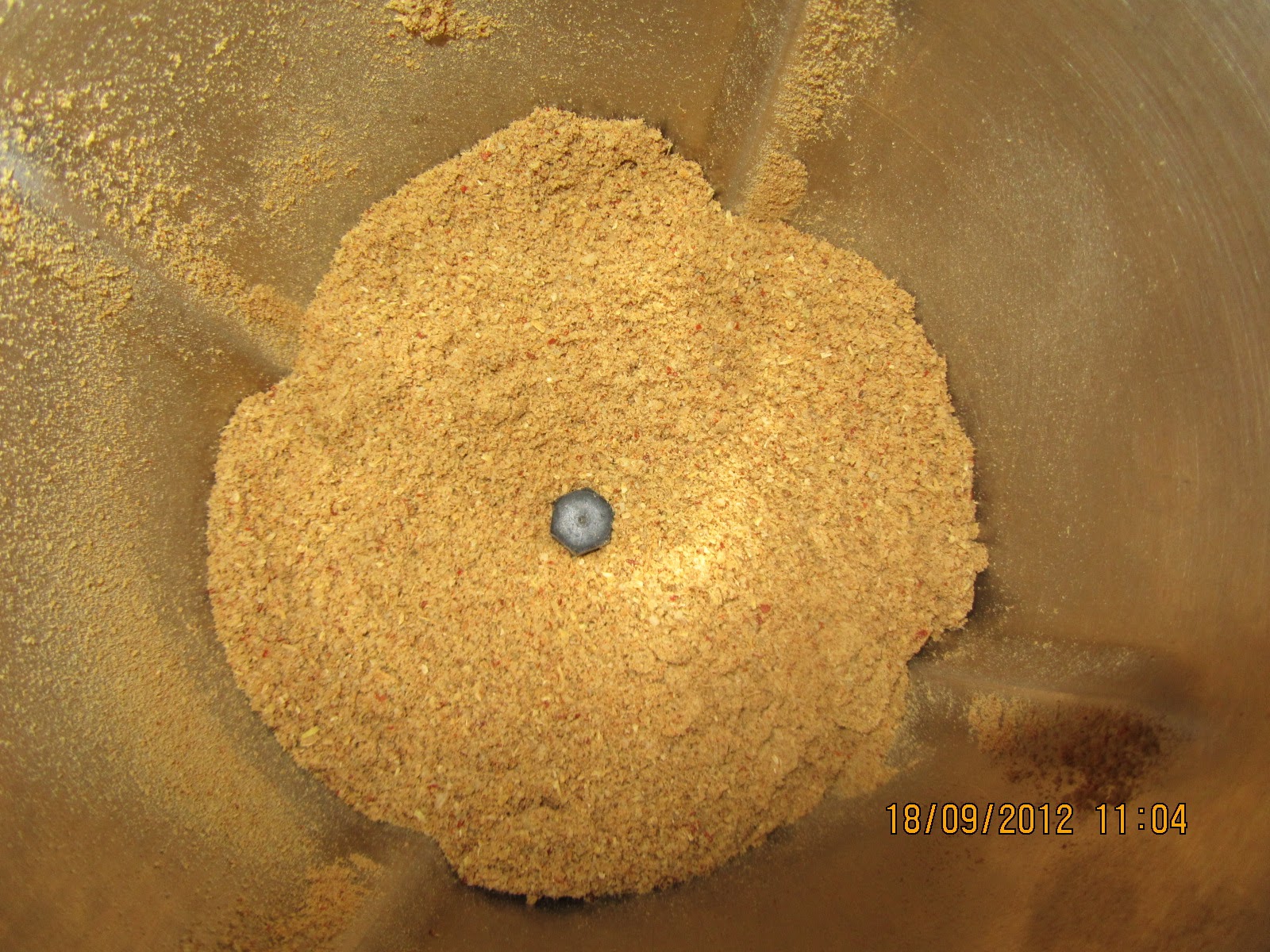
- Heat a tbsp of oil in a wide kadai and add urad, red chilly follwed by coriander seeds and jeera and roast until urad changes color and coriander seeds give a nice aroma.
- Add tamarind in the end and give it a toss. Remove and let it cool.
- In the same pan, add the curry leaves and slowly roast them in low flame without burning them, until they turn crisp to touch. Allow it to cool.
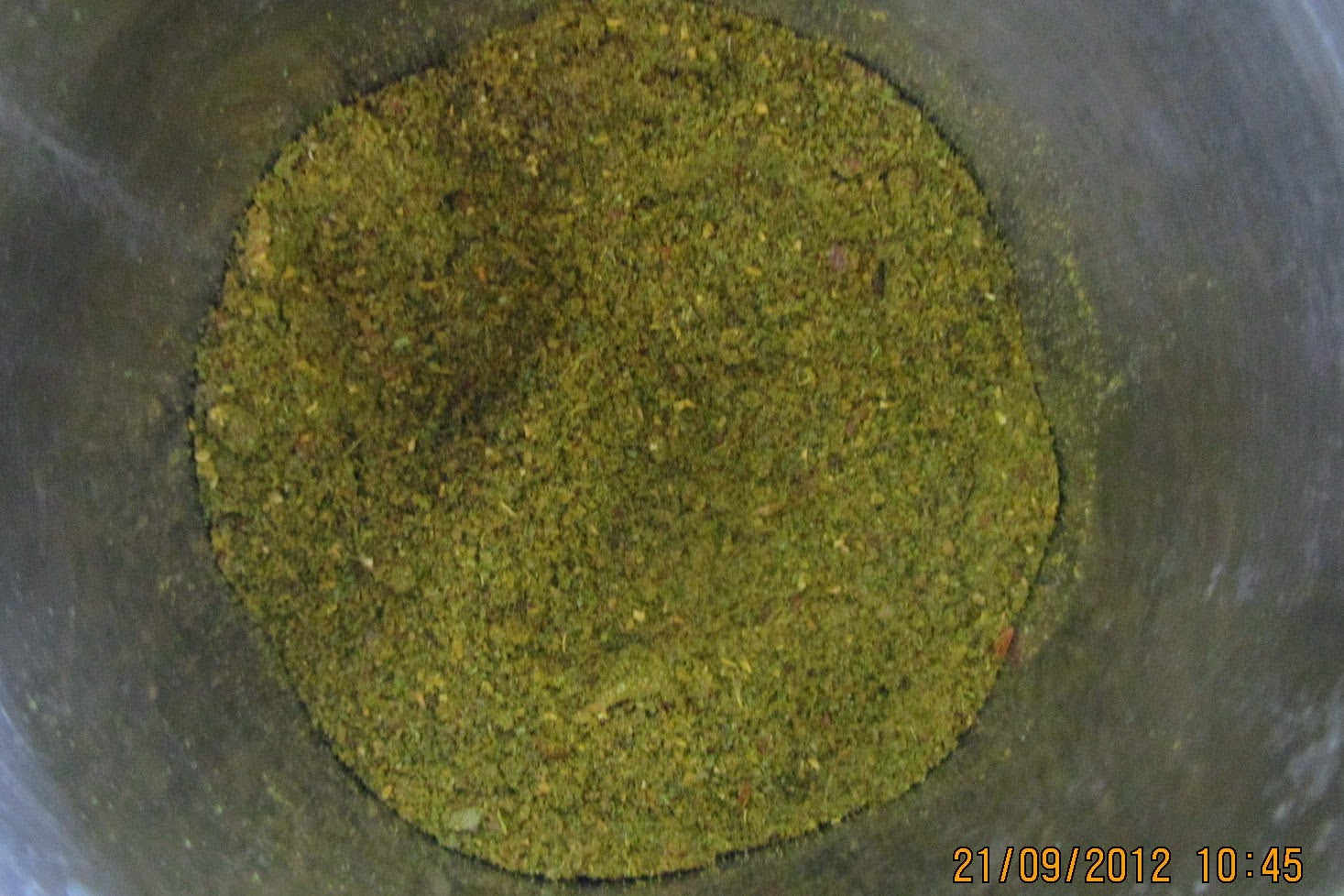
- In a mixie jar first add the roasted dal, chilly, tamarind etc and grind to a smooth powder and then add curry leaves in batches and salt and grind together to a fine powder. (can be a little coarse also)
- Remove, check for salt and adjust and once cooled store in airtight container.
Notes:
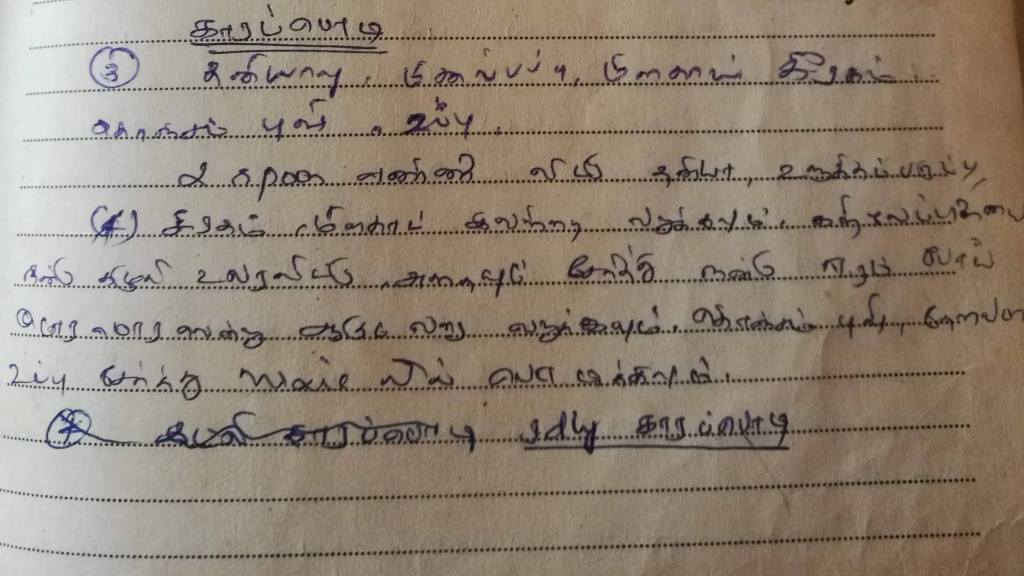
- Take care to roast the leaves thoroughly, to crispness or they wont get ground properly and wont taste good.
- While grinding if everything is added together, they wont get ground evenly. So first grind the tougher ingredients and once they are powdered add curry leaves.
- Amount of urad-dal and spices can be adjusted according to one’s taste. Some people also add chana dal which changes its subtle flavor totally, in my opinion.
 A Spring in your Step