
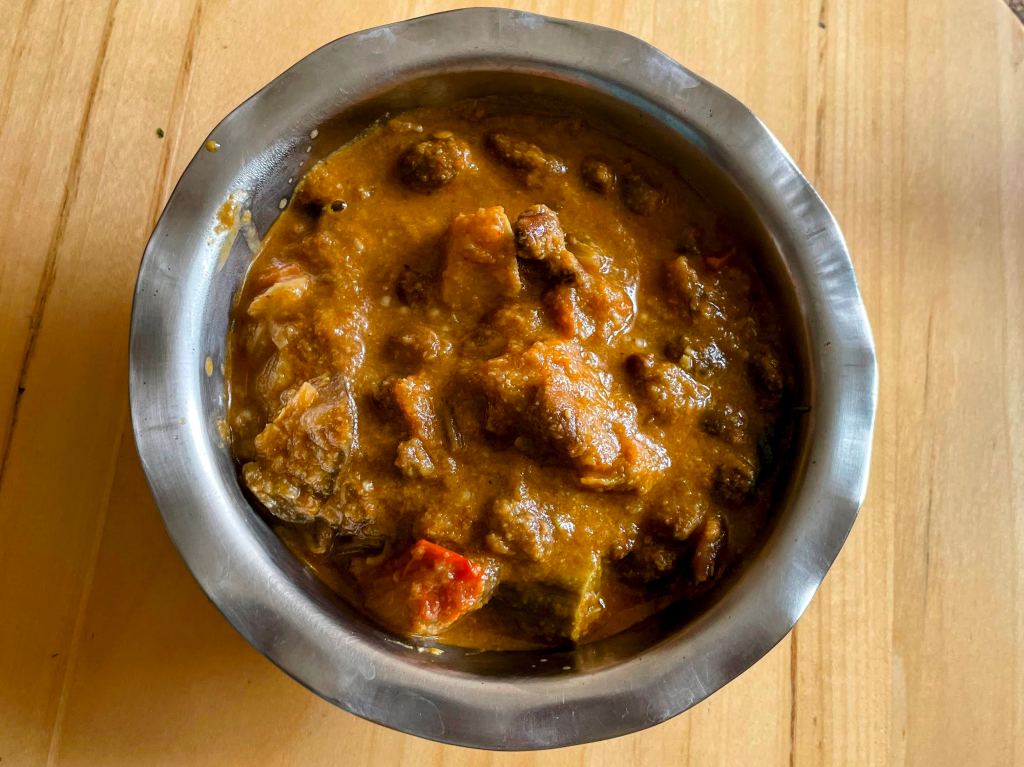
Mochaikottai kaara kuzhambu can be said to be unique to TN. This spicy gravy with an enticing aroma of ground masala and nutty flavor of mochaikottai (field beans) is a delightful accompaniment to rice and also idly, dosa, pongal even chapati etc.,
Belonging to the legume category these nutritious beans are great sources of protein and fiber. Fresh mochakkottai are usually available around Pongal time, that is January. But nowadays I see them even from August in TN. These are not popular in Telugu cuisine, only in the (TN) border areas like Tirupati, Chittur and are called Anapa-ginjalu. When fresh ones arent in season, dried ones are soaked overnight and used in the recipe. (Actually they would remove the outer skin of the seed by pressing from one end and hence it was also called pidukkan-kottai (squeezed seed), now they say it is optional)
When we were young we used to have this in our friends’ homes only. It used to taste not exactly delicious, but much more tempting, something like a fobidden fruit. Eating lunch at friends’ places was not particularly favored, almost not permitted. An occasional tiffin item (like the dosas at my friend’s house) or snacks are ok. This was somehow not prepared in our home. Masala items were not prepared in those days in Brahmin houses? Ginger-garlic paste and spices like cinnamon were associated with non-vegetarian items in those days, I think.
When we went to Hyderabad for the first time (or second?) for our cousin’s wedding (I was in 9th standard), we were invited to amma’s cousin – Papa pinni’s house for lunch. Babayyagaru with an IAAS was a high ranking official in the Railways and they were living in the railway quarters in Secunderabad. They seemed to have a high-class lifestyle to us (visiting from a relatively small town in TN which was a district hq, tho!). Amma, as can be expected with all her guilelessness and affection for her cousin was not the least perturbed. I dont know about nannagaru, maybe he wsn’t too, as he was used to officials like the district collector in his post as district medical officer. But we felt quite awkward when we saw her children – 2 boys who were few years younger than us, bury their heads all the time inside the books they were reading and spoke only in English. They didnt interact with us at all. (Later one of them became very close to me, my family). Anyway why I remembered this is because pinni made some veg pulav and boondi raita for lunch which tasted amazing. But we were quite thrilled and shocked to find a masala food like pulav being made and served in our relative’s house!
So, we had this dish only a few times at our friends’ houses. That too I remember having it more than once in my sister’s friend’s house. Her mother prepared this excellently. This kuzhambu with dosa, maybe. (Boiled corn were the other exciting food she always had to offer!! A 12 liter Prestige pressure cooker filled to a third with nicely boiled, tender corncobs with pearl-like kernels kept for us to pick one and munch on). Oh, that hospitality, friendship and affections were things of a bygone era 😿
Ingredients:
- For masala
- Shallot – 2 cups
- Tomato – 1 big
- Garalic pods – 10
- Cumin Seeds – 1 tsp
- pepper – 1/2 tsp
- Ginger – A Small Piece
- Grated coconut – 1 cup
- Turmeric Powder – 1/2 tsp
- Coriander Powder – 2 tsp
- Red Chilli Powder – 1 1/2 tsp
- Kuzhambu(or sambar) Powder – 1tsp
- Curry Leaves few
- For kuzhambu
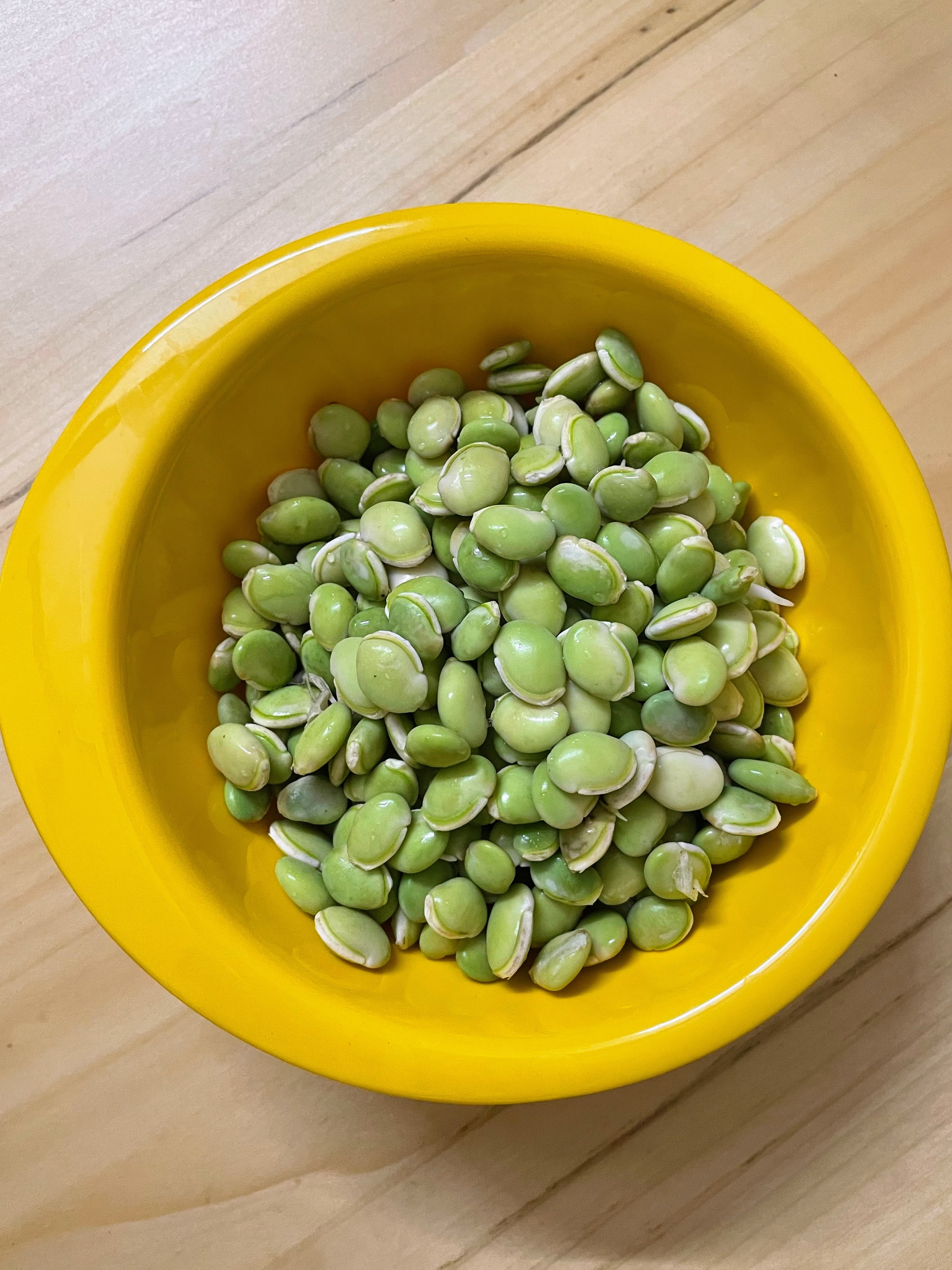
- Mochai – 2 cups (soaked or fresh)
- Mustard Seeds – 1 tsp
- Fenugreek seeds – 1/2 tsp
- Asafoetida – A Pinch
- Curry Leaves
- Green chilly – 2 slit (opt)
- Brinjal – 2 No’s
- Drumstick – 1 No
- Shallot – 1/2 cup, slightly chopped
- Tomato – 1
- Garalic pods – 10
- Tamarind – Lemon Size
- Coriander leaves
- Salt – To Taste
- Gingelly Oil
Method:
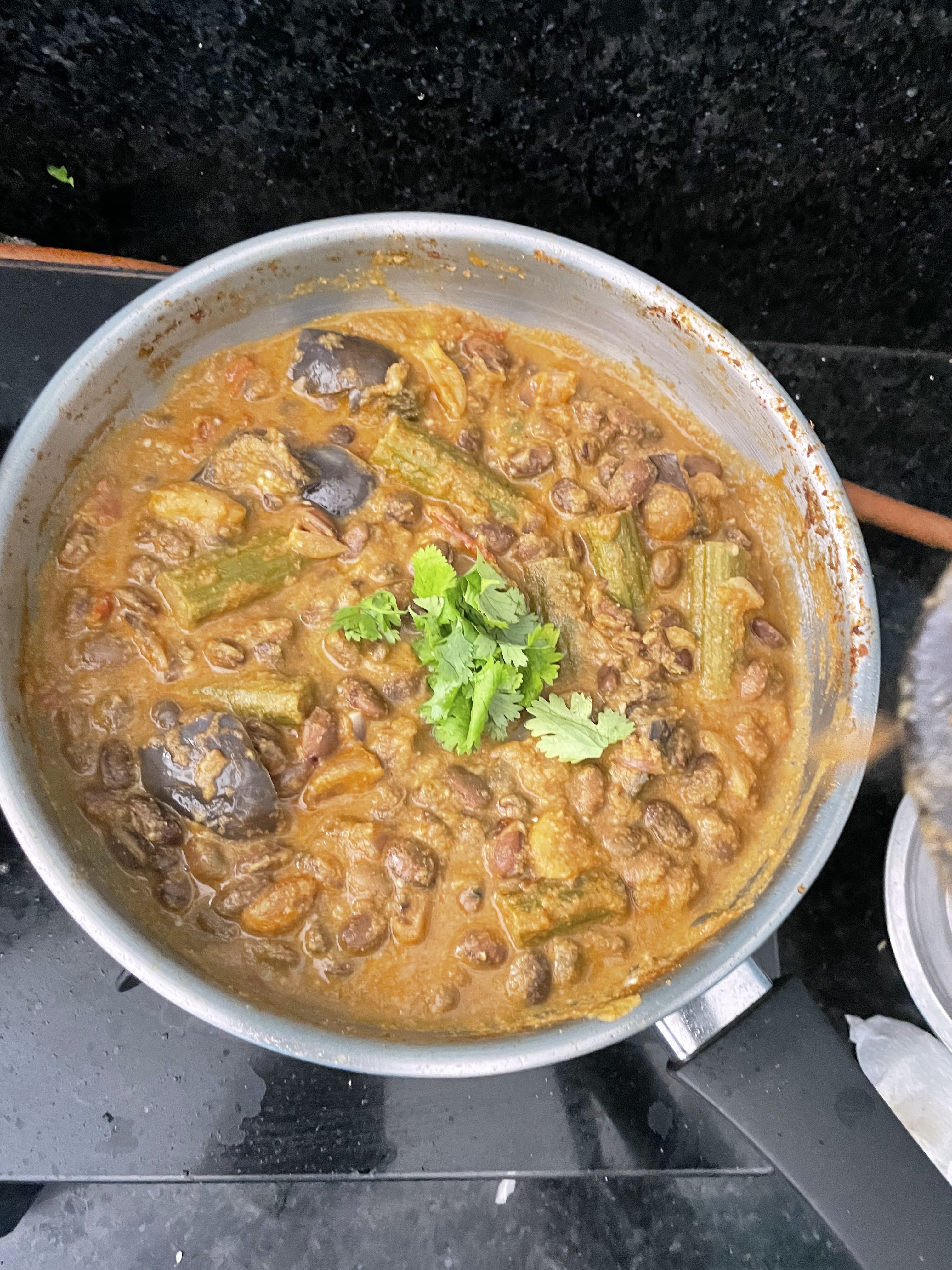
Masala:
1. Heat 2 tbsp oil in a pan and add shallots, garlic and ginger. Add cumin and pepper and cook until shallots turn transparent.
2. Add chopped tomato, curry leaves, turmeric and salt and let it cook until soft.
3. Add coriander powder, chilli powder and sambar/kuzhambu powder, mix and switch off the heat. 4. Add grated coconut in the end or add it freshly while grinding.
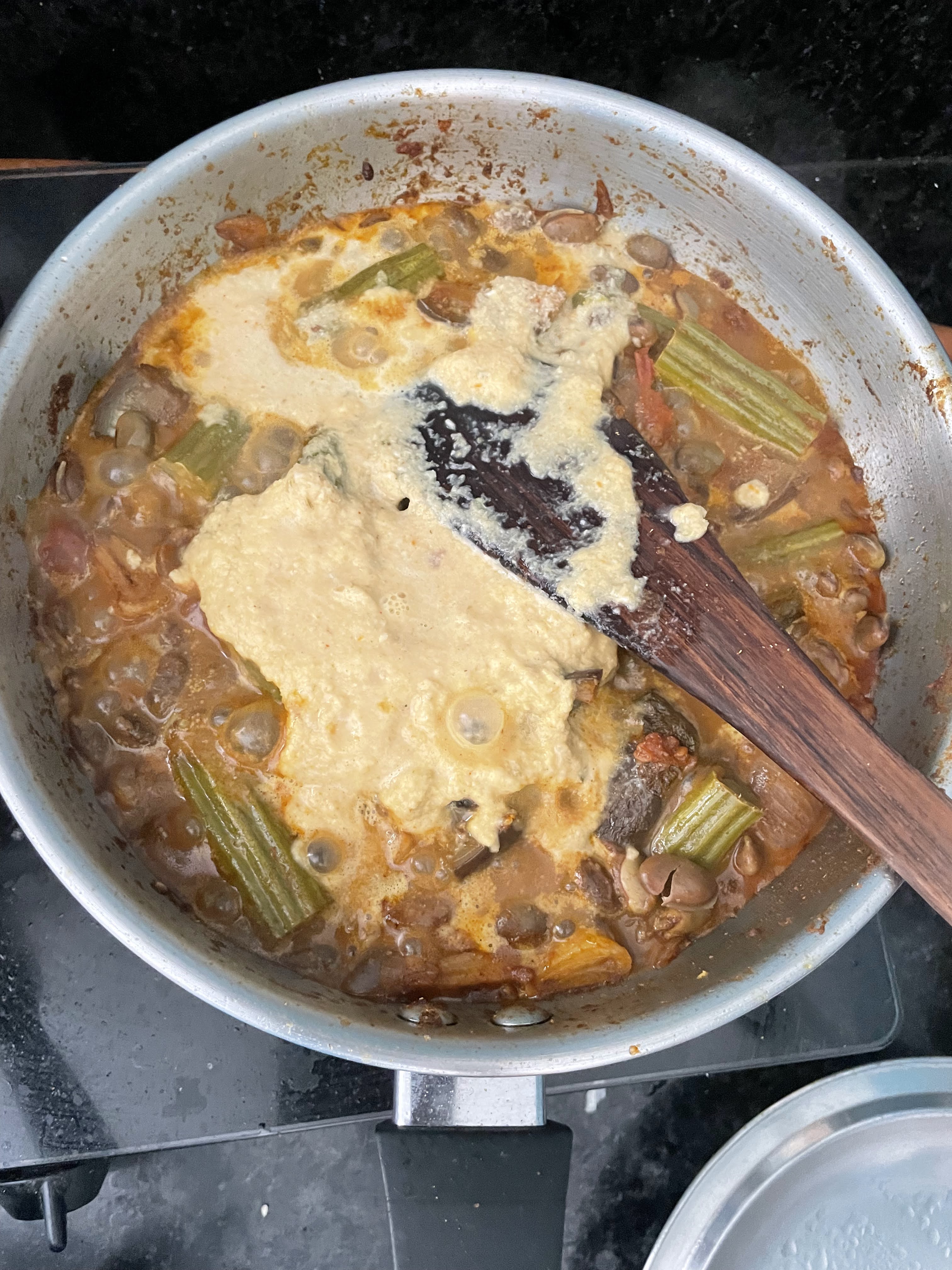
5. Let the mixture cool and then grind to a smooth paste with some water.
Kuzhambu:
1. Pressure cook mochai to a soft texture (4 to 6 whistles)
2. Heat 2 tbsp oil and season with mustard, fenugreek, curry Leaves and hing.
3. Add shallots and garlic and cook till transparent.
4. Add tomato and a little salt and cook until soft.
5. Add drumstcik and brinjal and let them cook.
6. Now add masala, mix well and let it cook for few minutes.
7. Add mochai water and then mochai.
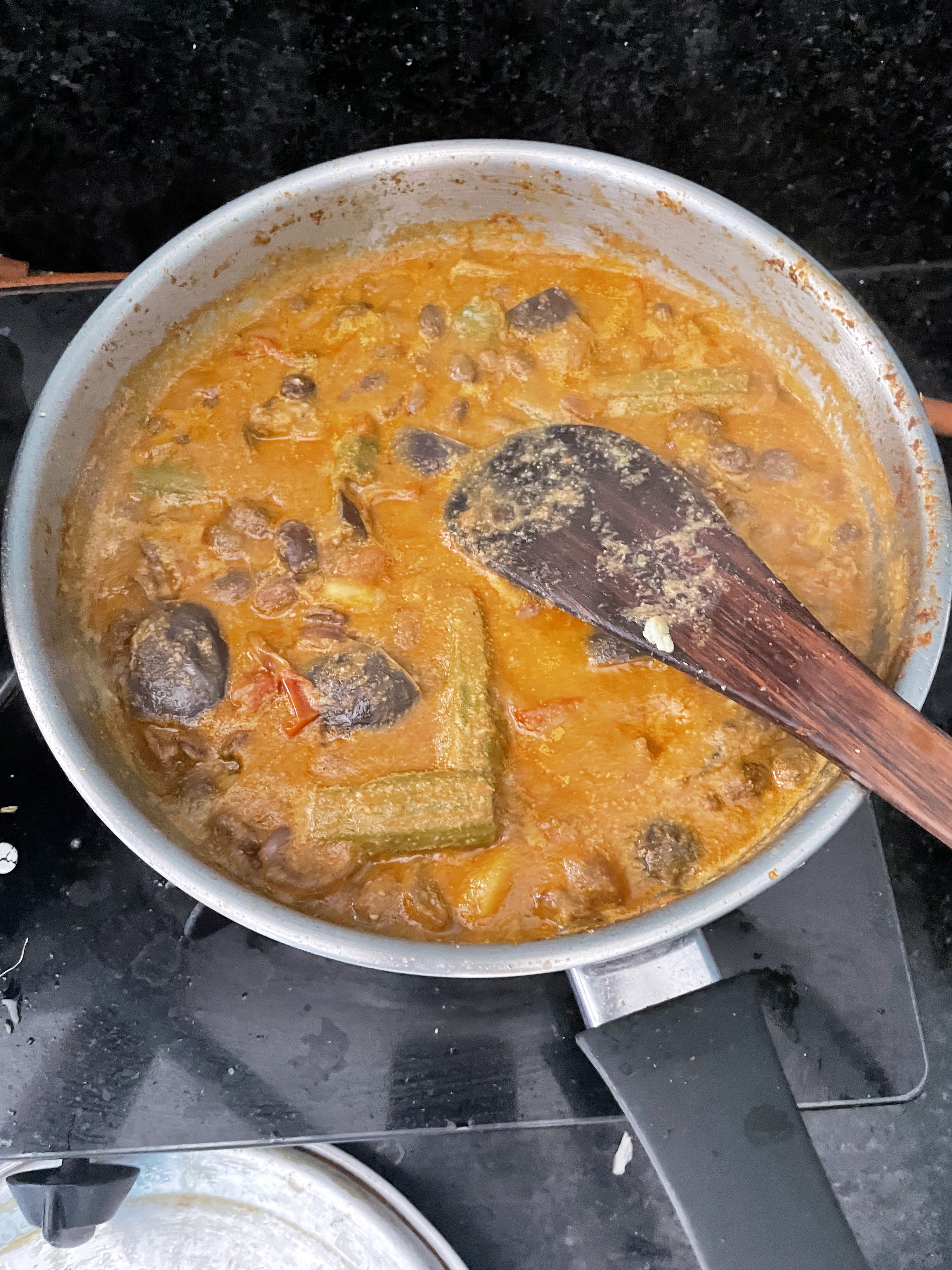
8. Last add tamarind juice and cook everything together to the desired consistency.
9. Garnish with coriander leaves.
Notes:
- This kuzhambu can be prepared in many simpler ways too. Just cook raw mochai, drumstick and brinjal in pressure cooker (without making it mushy), saute garlic, chopped onion after tempering and cook with tomato pieces like in any kuzhambu adding salt and masala powders (sambar, chilli) and then adding tamarind and cooked veggies. Bring it to boil, optionally add ground paste of coconut, fennel seeds and garlic and cook together for 2 minutes and turn off the heat.
- Dried mochai can also be used in the same way either after soaking overnight or dry roasting it until it shows gold flecks here and there emanating an aroma.
 A Spring in your Step