
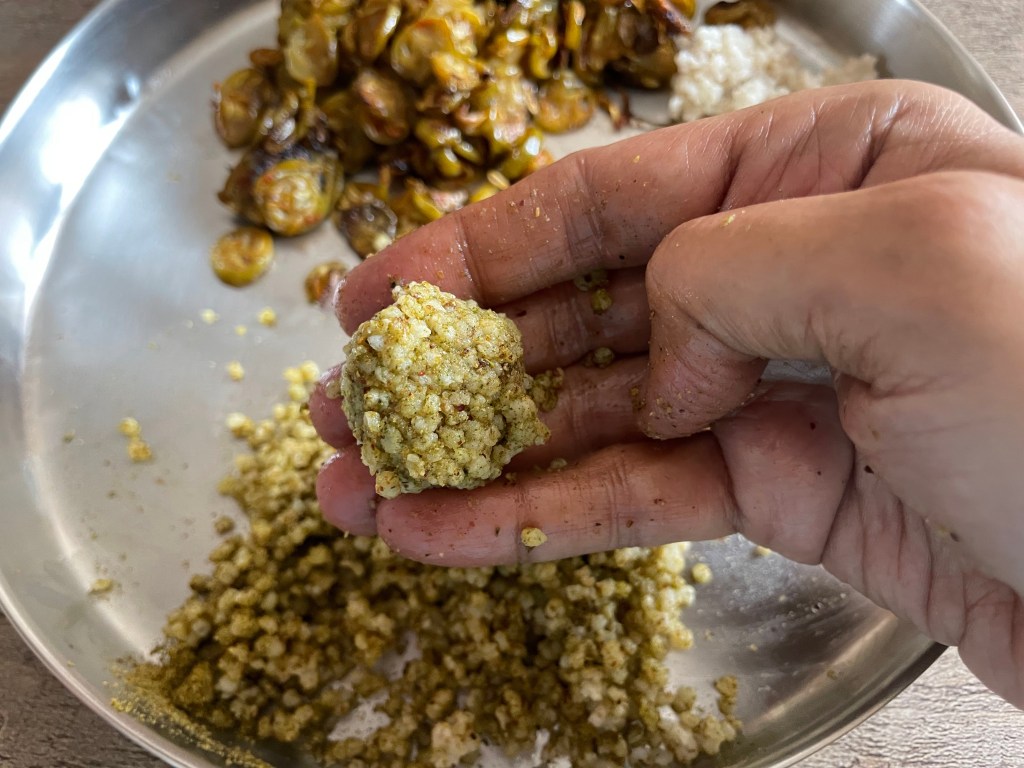
Podis are important accompaniments to south Indian food – rice or dishes like idly, dosa. Their main purpose is to add flavor to the base food. These wonderful powders which are simply a mix of spice and lentil or sometimes leafy greens, as in this case, are appetizers, digestive aids, healthy substitute for other dishes and just hearty comfort-food. Hot rice mixed with podi and some ghee or sesame oil is something no Telugu can resist!
There are many different kinds of podis like kandipodi, karivepaku podi, sonti podi, munagaku (moringa/ drumstick), nuvvu podi, idly podi etc., Some of them go best with rice and some with our tiffins – idly, dosa, uttappam as well. They are real godsend to ‘meal makers’ at times when the usual side-dish for the tiffin or rice is absent, seamlessly covering the missing item.
When we stayed in the hostels in our college days, everyone used to get a good supply of several podis. For one thing, this can be preserved easily for weeks which lends itself to packing for such needs and travels. Apart from being the source of nourishment or health aid, they served as a piece of home we took comfort in.
Munagaku, murungai keerai or drumstick leaves is a great superfood packed with vitamins, minerals, and antioxidants and so full of health benefits. We cook and eat them in pappukura, kadaiyal, poriyal etc in which it is cooked as fresh leaves. This powder uses sun or pan dried drumstick leaves along with a few other spices. I was not a great fan of munagaku until my second TN stint. This time I found nice, tender drumstick leafy greens often in the market and understood why it holds the same place as (my dear) curry leaves in the hearts of many passionate cooks. I have been preparing many recipes with the help of the internet, adding my own tweaks.
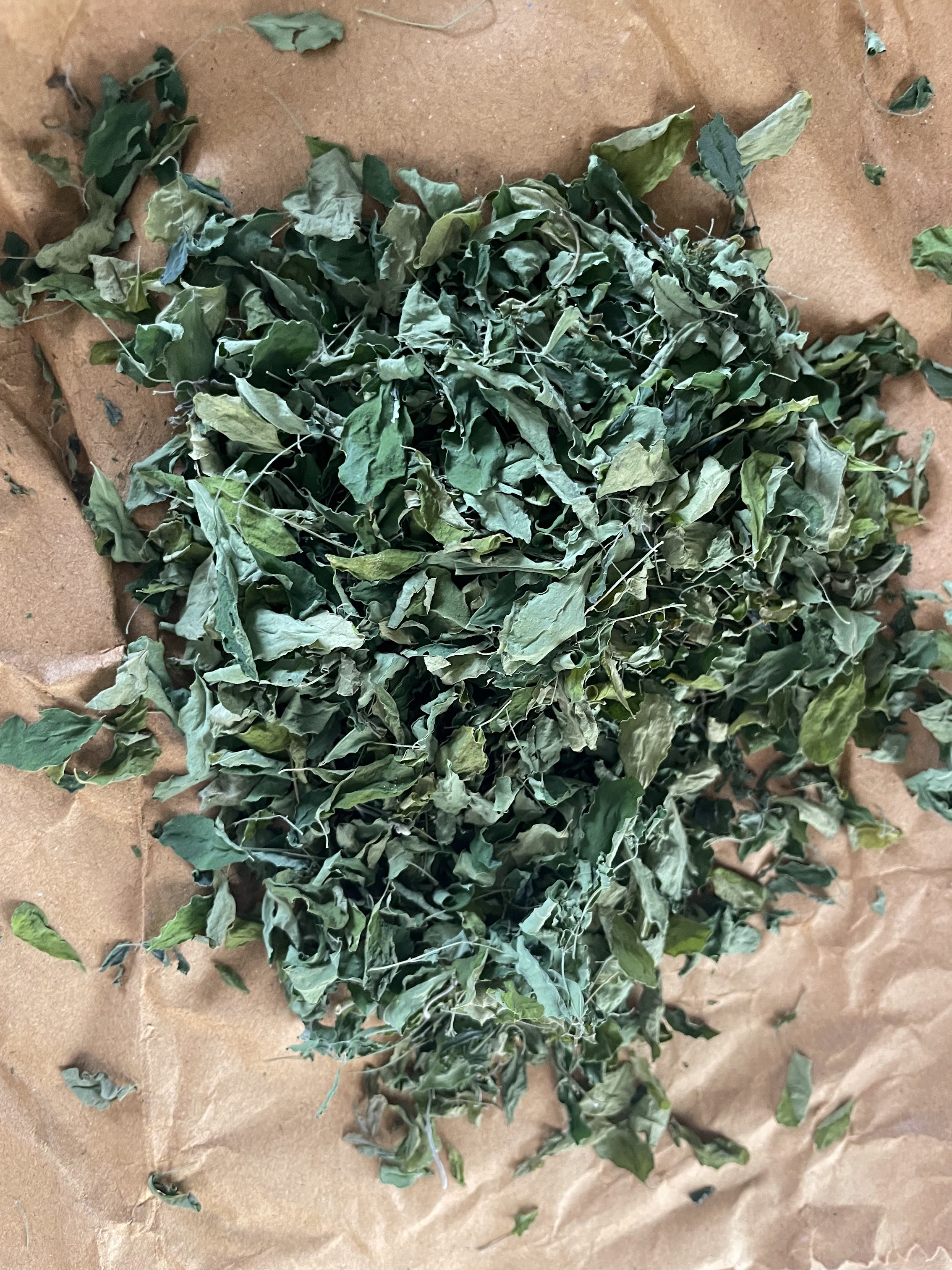
Honestly I discovered this murungai keerai podi recipe today from one of my on-off online cooking gurus YT video. I had so lovingly picked some tender stems of munagaku from trees lining a canal near Trichur during our recent trip to Guruvayur, with such pride and satisfaction. I rolled the stems of fresh green leaves in a badam leaf and kept it in the car. We went for darshan of Guruvayurappan and returned to the car after 2 hours and found them all wilted. By next day they had dried up so much they broke upon my touch. I was so disappointed but brought it home. Today when I saw V’s video where he used sun-dried murungai keerai, I was like “Yay!” I can use my car-dried keerai. Only bad thing that worried me was I did/could not wash the leaves which is a must-must thing with all keerai as they will always house insects apart from dirt carried by wind. But I didnt have the heart to waste the object of such delight. So I carefully checked through the leaves as I removed them off the stems as best I could. They came off much easier than fresh leaves. Then I used them to make this podi (with a guilty heart).
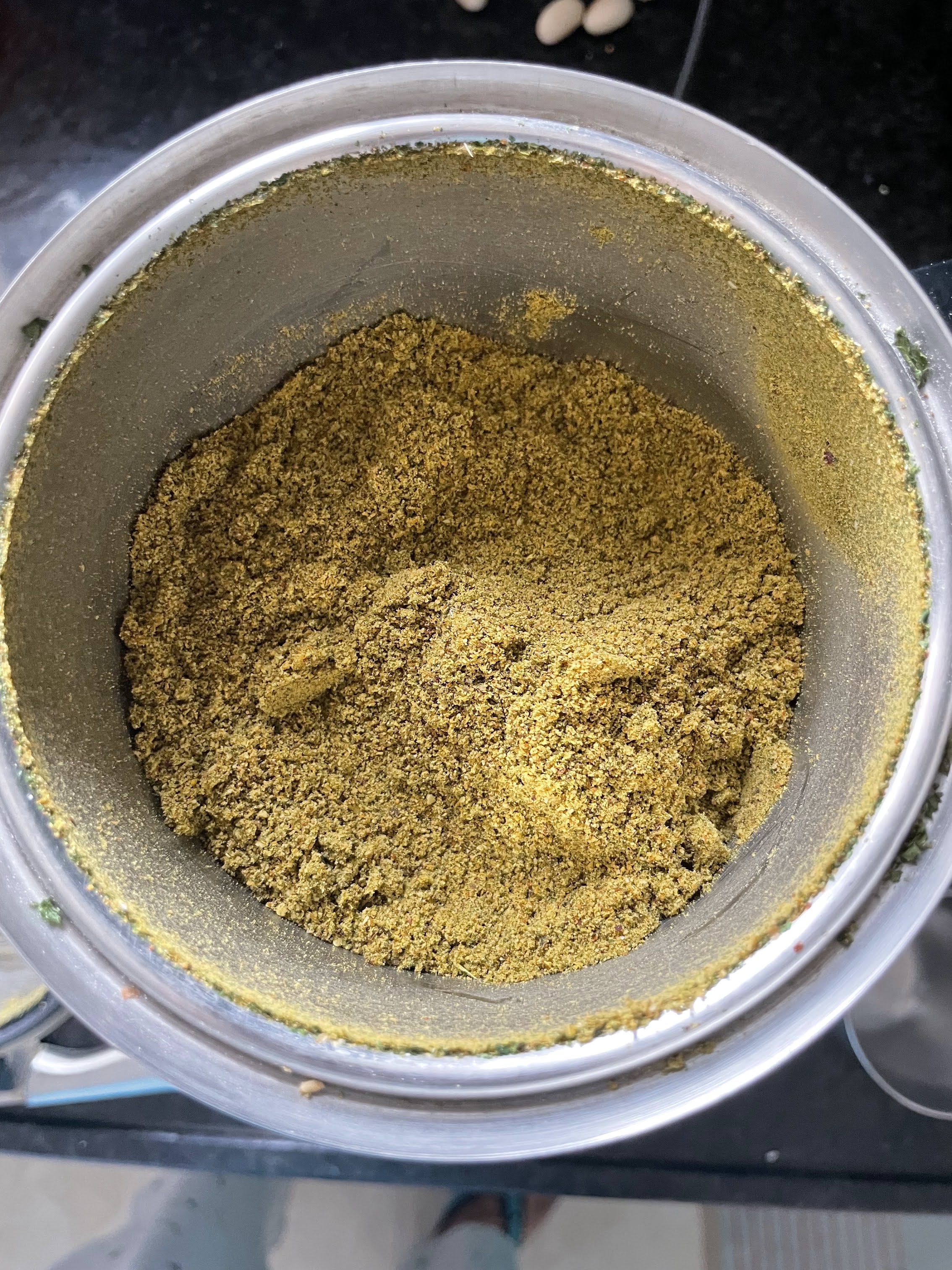
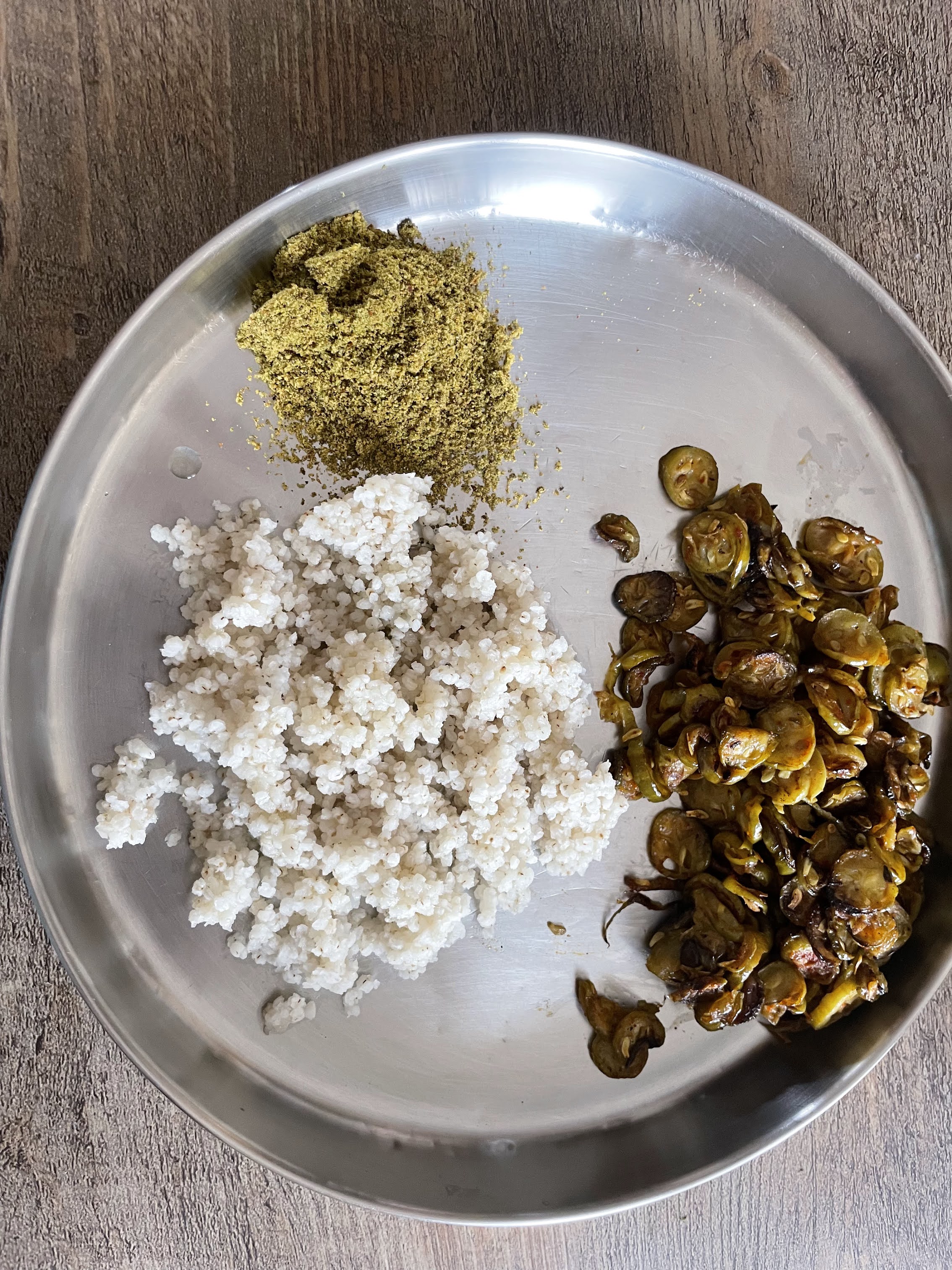
It came out very well. As we had it with kodo millet that we had for lunch today, along with some sesame oil, it really tasted very delicious, and different from our kandipodi and karappodis which taste distinctly like their base ingredient (but no less yummy, mind you). This is a blend of several items like substantial amount of lentils, sesame seeds, spices, garlic, and tamarind transforming it into a new wholesome food. This is my new favorite with this keerai 😊
Ingredients:
- Munagaku (murungai keerai) – 1 cup tightly packed, cleaned and dried
- Whole urad – 1 tbsp
- Chana del – 1 tbsp
- Toor dal – 1 tbsp
- Sesame seeds – 2 tbsp
- Coriander seeds – 1 tbsp
- Jeera – 1/2 tsp
- Red chilly – 10
- Garlic pods – 20 small sized (or slice them if big)
- Tamarind – star gooseberry size
- Curry leaves – a few
- Hing – liberally
- Salt
- Sesame oil – 1 tbsp
Method:
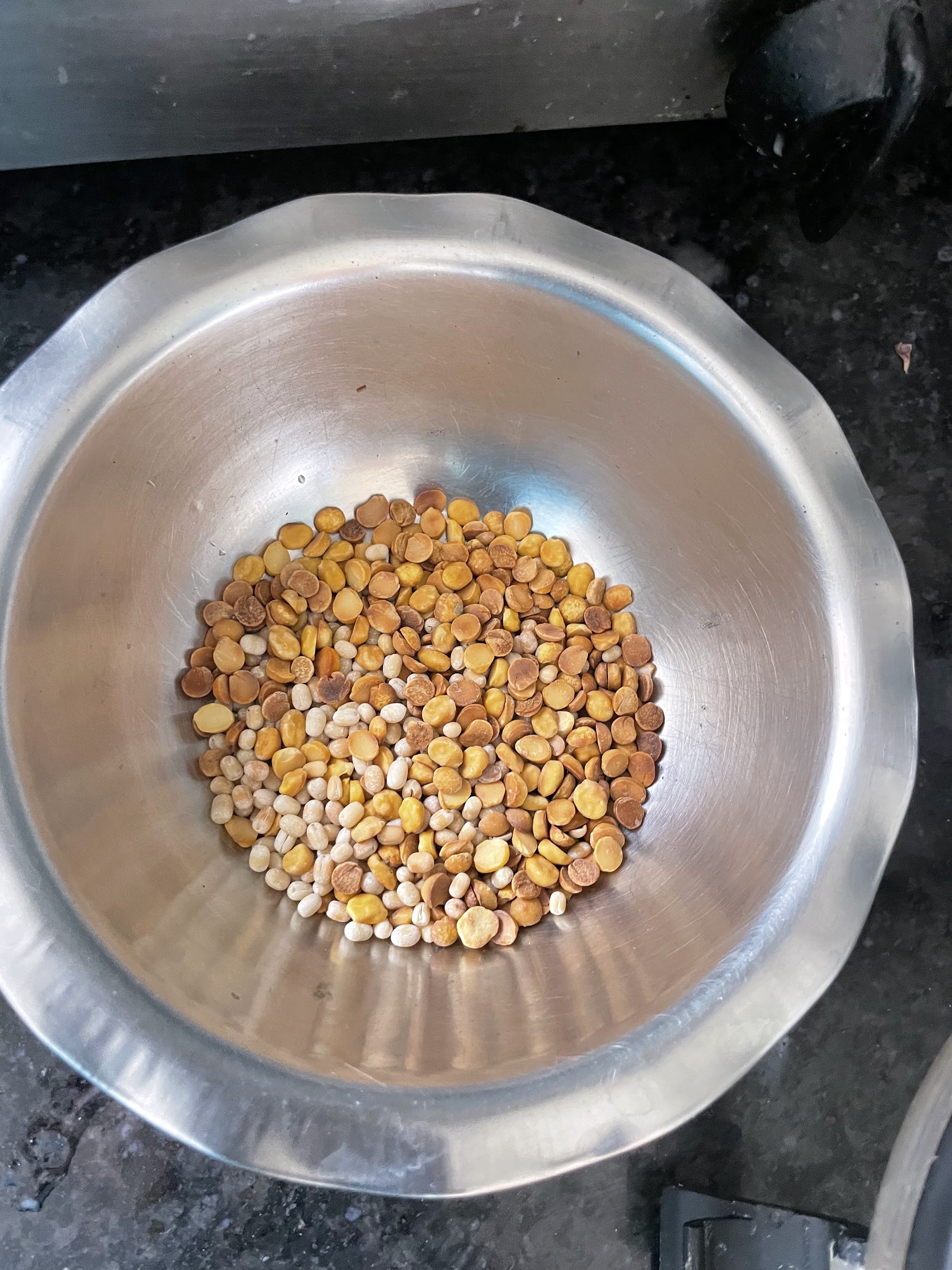

- Heat a pan, add the three dals and dry roast stirring continuously until urad slightly changes color and the others turn a little dark. Remove.
- Heat a tbsp of oil in the pan and add red chilly and then sesame seeds.
- Keep roasting and add all the other ingredients – garlic, coriander seeds, jeera, curry leaves and when they roasted well, add tamarind and roast for a minute.
- Add this to the dals and cool.
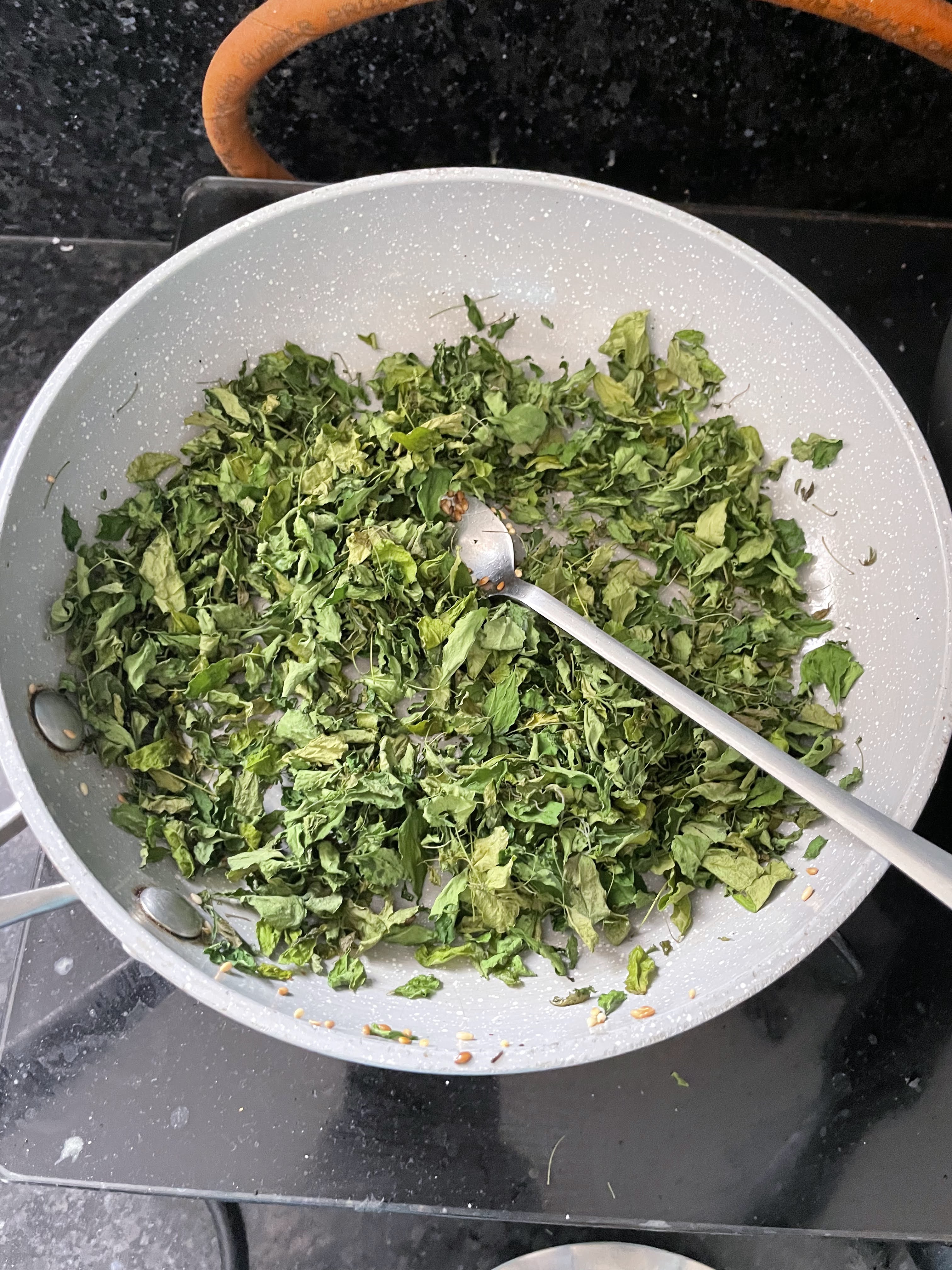
- In the same hot pan add the drumstick leaves and stir for a minute or two without burning them and just getting them to be crisp.
- Add all these to a mixie jar and grind to a fine powder.
- Add salt and hing and mix thoroughly.
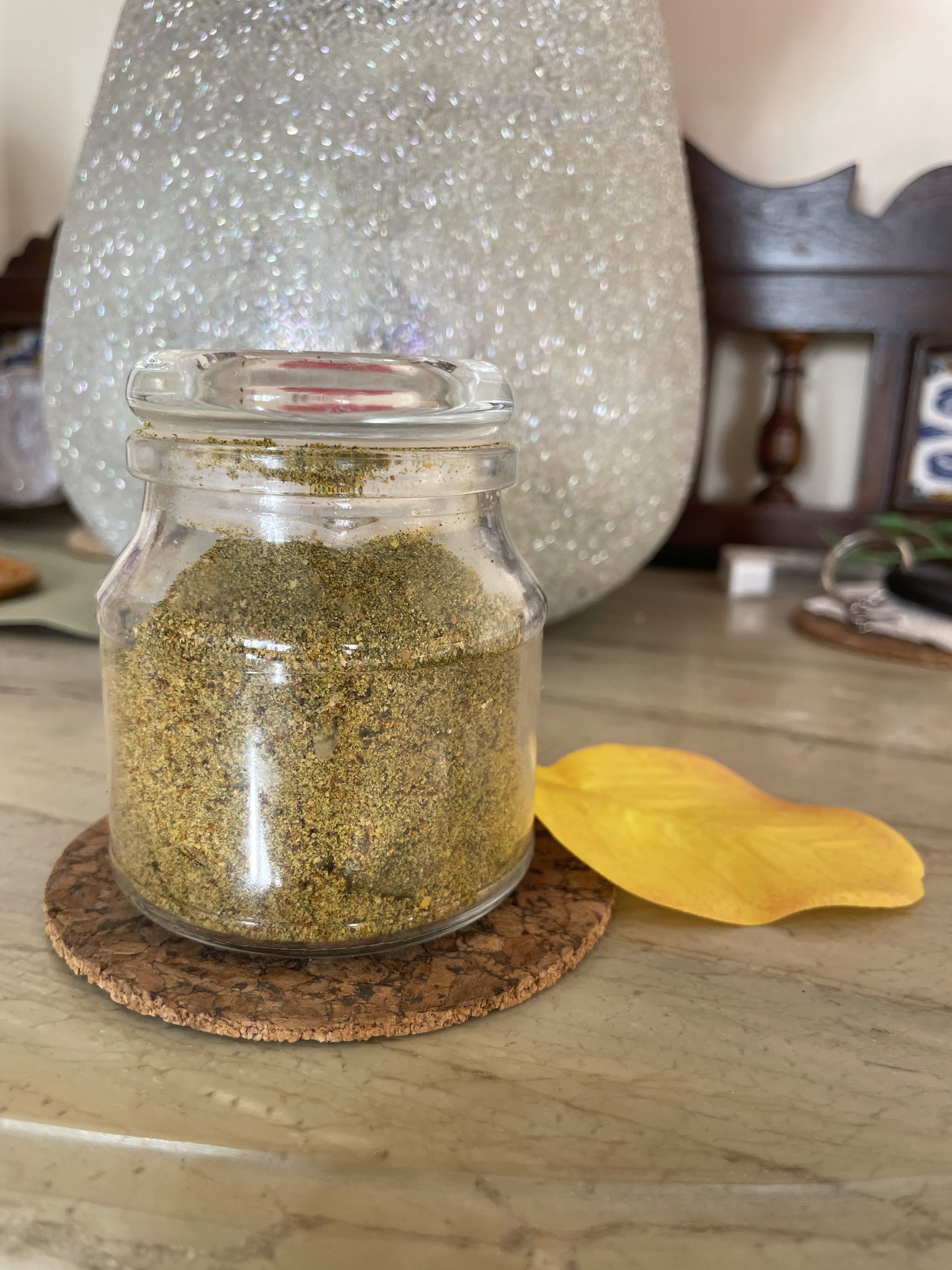
- Store in an airtight container and use with care.
Notes:
- Stays flavorful for couple of weeks on the shelf and longer in the fridge.
 A Spring in your Step