

This is a very ‘Andhrite’, spicy side dish in the core classic cuisine. Apart from Kandipodi, which enjoys a celebrity status as ‘gunpowder’ across the country, its close sibling Kandipappu pachadi is a pure bliss for all traditional food lovers. Just grinding dry-roasted tuar dal (Pigeon pea) with very few spices is all it takes to create this ultra-comfort dish. The extent to which dal must be roasted is the secret. Also amount of spice (red chillies) needed to give a slightly hot spike is a thing about experience.
Like I keep saying, this lunch item also was not my favorite. So I dont have any childhood memory around it. But I so well remember the fuss that goes into roasting tuar dal for various preparations. In the traditional style, it is always dry roasted to varying degrees – just well roasted to an aromatic stage (not much color change) for all pappus, well roasted to slightly red color for pachadi, a little darker for kandipodi. It is never to be burnt to a dark/ black color…carefully stirred in low flame to the required stage.
Amma used to do this process every single day (almost) in her lunch preparations. As kids, when we were below the age of 10 (or 12?) my sister and I would hear the cling-clang sounds of her roasting stop and would run to the kitchen whereupon she would drop small mounds(1/2 tsp!) of roasted dal for each of us, supposedly to check the done-ness. Also for our snacking! We would run with it delightedly, crunching the pulse one-by-one. Those days it was ‘antu’ (requires washing anything that comes into contact with it, in this case our hands). So she would have wiped that place with a wet hand, but how we honored (no other go!) the custom with that dal, I dont remember.
My MIL, SIL and occasionally Ammamma used to dry roast a whole lot, about a kg or so of this Tuar dal for everyday use, to save time or just reduce one step, and store separately. There used to be a separate shelf or a tier on the rack assigned for keeping such items – idly rava, jeelakarra-karam, kura karam, putnala pappu (roasted gram) etc., also all pickles (except avakaya maybe?) as they all have roasted elements in them. Somehow I learnt this antu (‘engili’, ‘madi’ and ‘muttu/mayilu’) concept very well from childhood with Amma and later more properly during my time at Ammamma’s. As I mentioned elsewhere, ammamma’s training is ISI – ultimate benchmark. My mother-in-law (and sister-in-law, to a less degree) trusted me absolutely in this, ranking me far higher (than others there). She trusted me with most things in life, though I sometimes wondered, not always with her intentions and decisions.
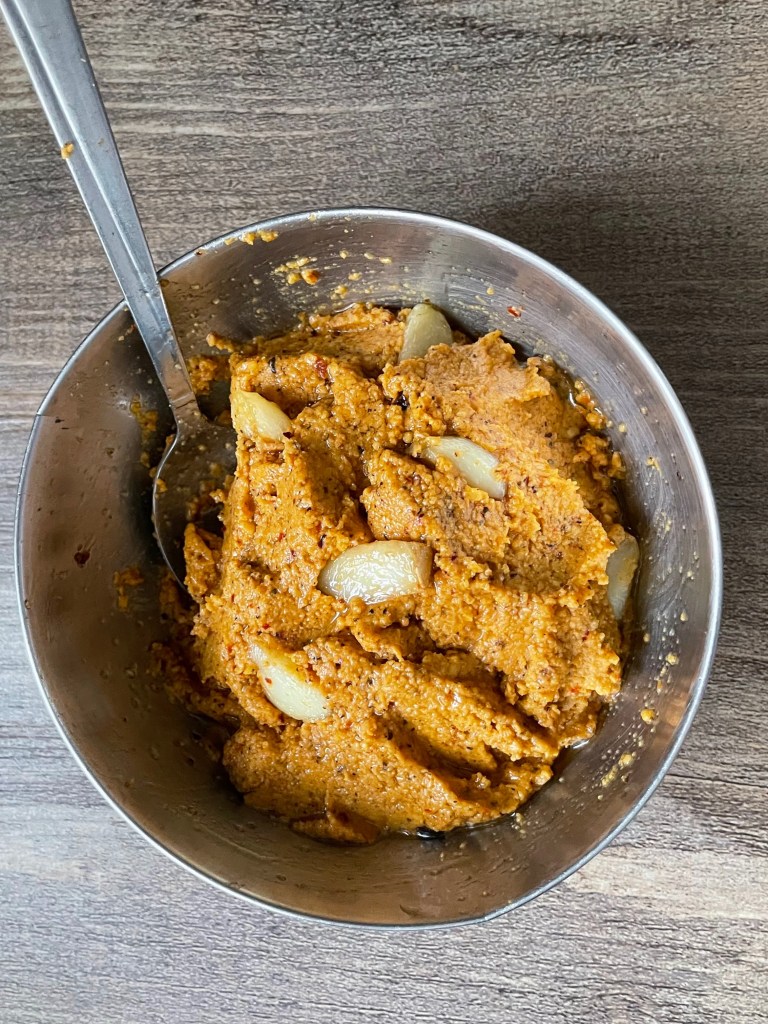
Anyway for this pachadi we dry roast fresh tuar dal from scratch to the perfect golden red and proceed. Adorned with golden-brown fried whole garlic pods which add a subtle but deep flavor and are soft to the bite, this is one of my husband’s all-time favorites. My son neutral.
It is at times like this when we have kandipappu pachadi and drumstick chaaru with hot rice for lunch on a tired and hungry day, with pure satisfaction, that we truly appreciate Walt Whitman’s “Simplicity is the glory of expression”. Like we did today 😌
Ingredients:
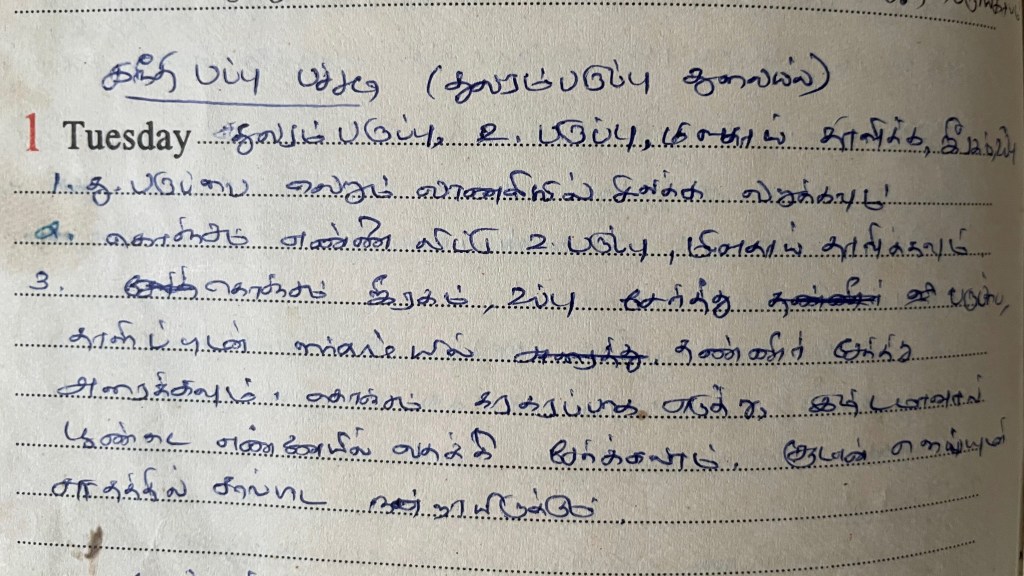
- Tuar dal – 1/2 cup
- Red chilly – 10 (round, or adjust based on spiciness of the one used)
- Urad dal – 1 tsp
- Jeera – 1/2 tsp
- Sesame oil – 2 tbsp
- Garlic pods – 10
- Salt
Method:
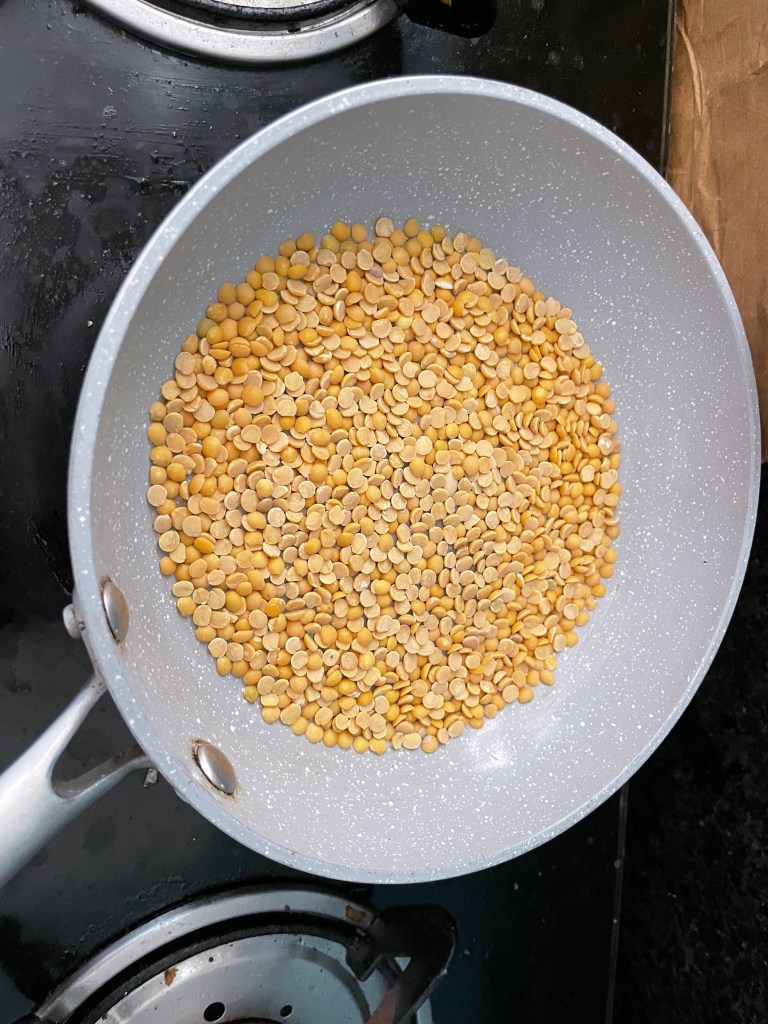
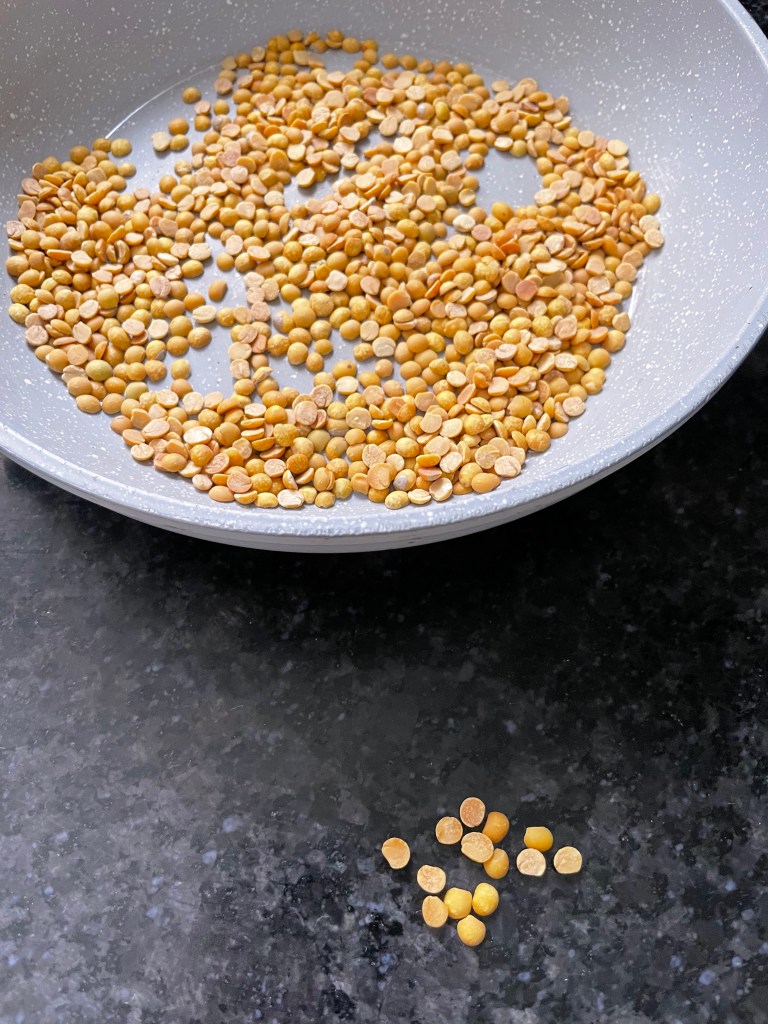


- Heat a pan and dry roast tuar dal in low flame, stirring continuosly till it gives a nice aroma and turns slightly red. Let it cool.
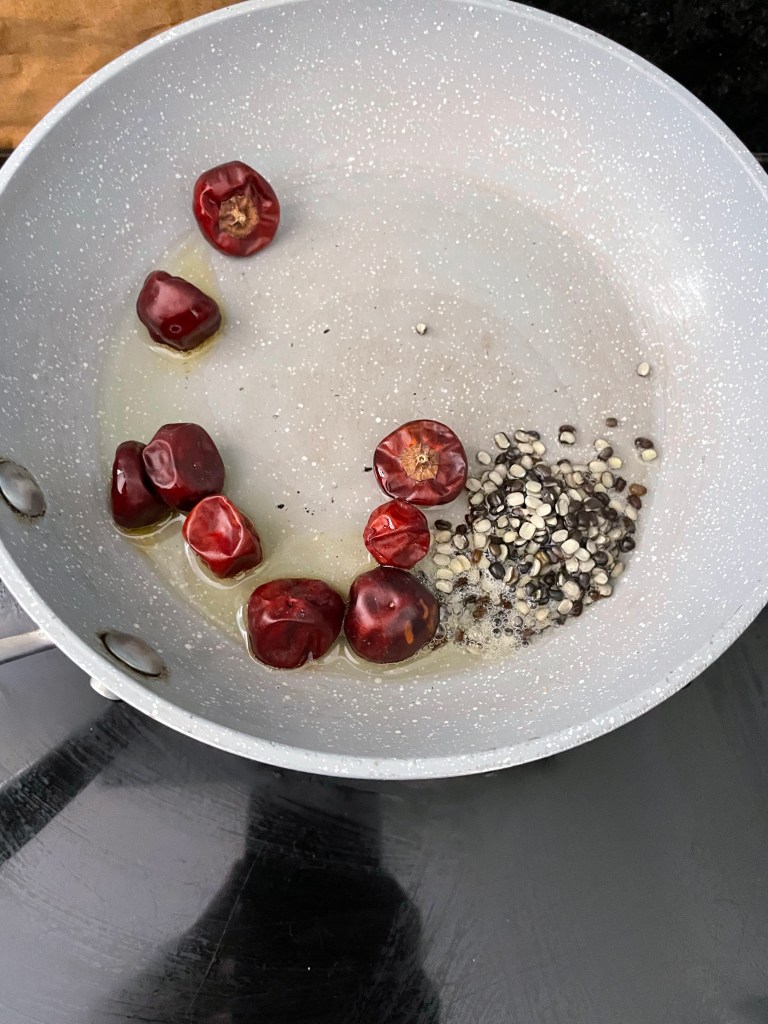
- Add a tbsp of oil and fry urad dal and red chilly until they both change color. Let this also cool.
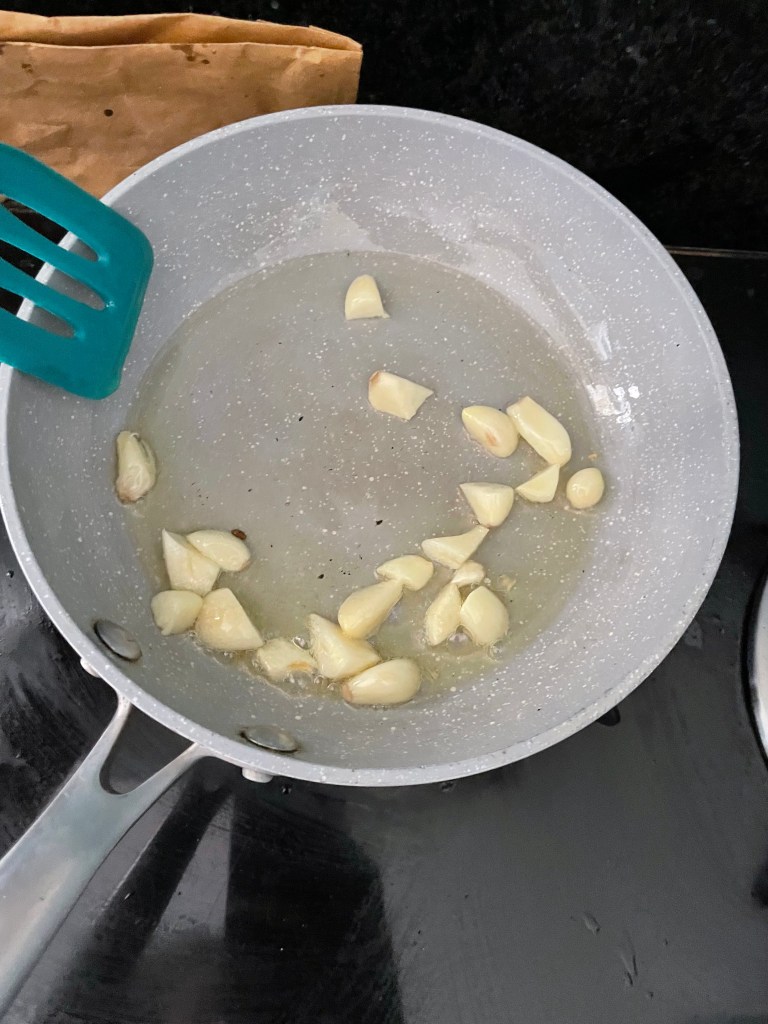
- Heat a tbsp of oil and fry garlic in a low/medium flame with a pinch of salt till they turn slightly golden-brown. Keep aside.
- In a mixie, grind roasted tuar dal, fried items along with jeera, salt and water to a slightly coarse paste.
- Add the fried garlic to the ground paste and mix. Done!
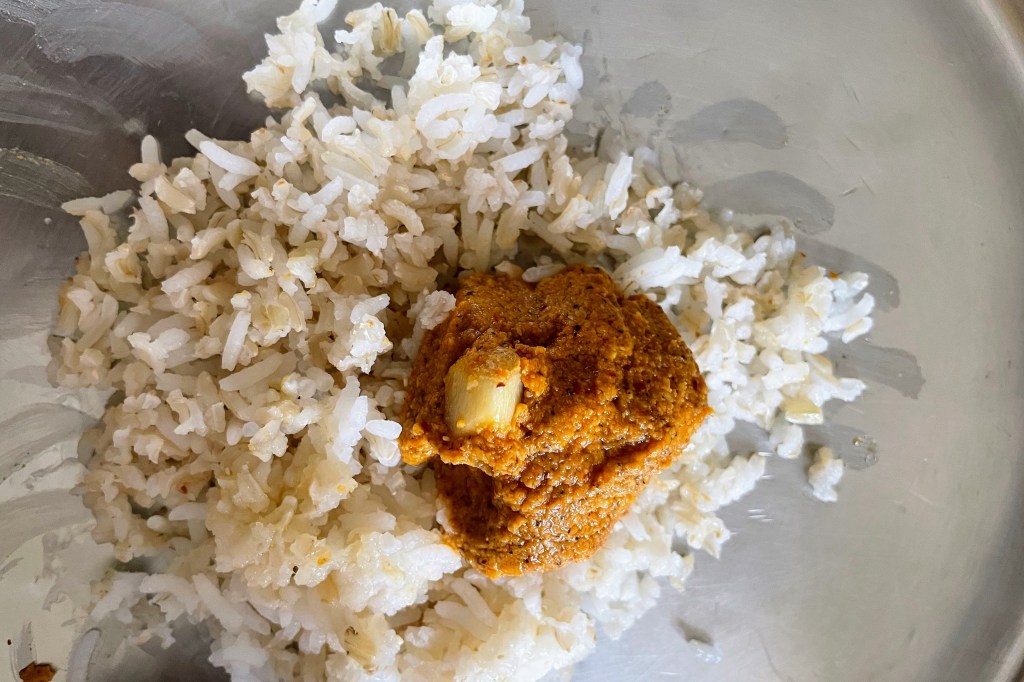
- Mix 1 to 2 tbsp of kandipappu pachadi with hot rice, and a tsp of melted ghee, and savour it!
Notes:
- While roasting, you should turn off heat as soon as dal color changes and after taking the pan off heat also stir for a minute as it continues to roast in the pan’s heat. Or just transfer it to a cool plate if you roasted till the color change already.
- It is generally believed that liberal use of oil enhances taste. I use moderately.
- People eat this along with raw shallots or cut onion for more pungent bite.
- In Tamilnadu also this called ‘Thuvaram paruppu thuvayal’ is a popular dish, usually in brahmin households. Now fortunately everyone enjoys this and other such region/community-specific tastes.
 A Spring in your Step