
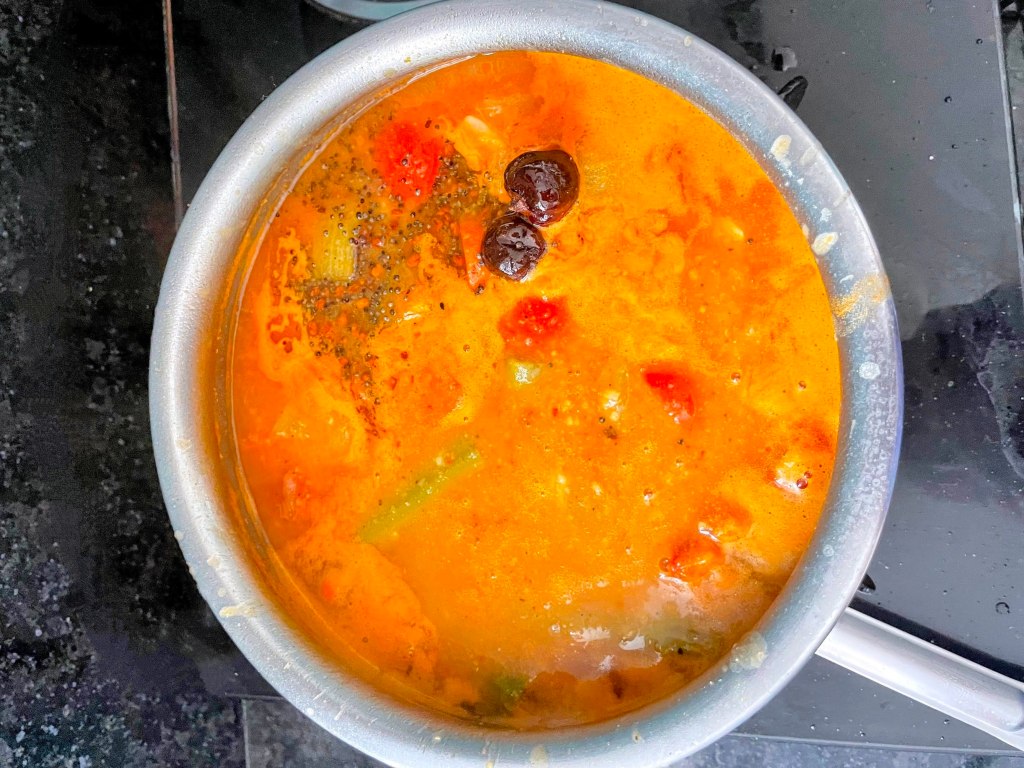
There is no need for any introduction to this chakravarty dish from Tamilnadu, by which entire country is known. A concoction of dal, vegetables, tamarind juice and sambar masala, Sambar has countless customs and numerous versions of preparation even in Tamilnadu. Outside TN, close neighbours Andhra, Kerala and Karnataka have their own traditional styles and innovative modern twists. But in TN ‘meals’ means sambar, then you can have n other items, whatever!
Though I grew up in TN I wasn’t into Tamil lunch items as they didn’t interest me as much as the tiffin items and snacks. But sambar was ever present – in all three meals breakfast, lunch and dinner as accompaniment for idly, dosa, vadai, pongal etc., So though my preferred side dish for these were the chutneys, sambar was consumed, nevertheless with less enthusiasm. Even in the hostel I had less of it and more of rasam and curd. Only later (wasting about 20 years 🙁) I understood its undisputed supremacy.
In school days at my dearest friend’s house I often used to have dosa and sambar. I used to hang out with her there all the time to amma’s slight displeasure. When her family went out of town for a day or so, her mother would prepare dosa batter and sambar as the day’s food. They would eat dosa for lunch also those days, I dont know if it was just to make it easy for children, as even children (10+ yrs) were able to make dosas then. And that was such a delight for me. Sambar was the accompaniment as it stays for the day without getting spoiled soon (just boil it once more). My friend used to make crisp and soft dosas nicely and we would eat them with sambar. It used to taste so good, I can never forget.
In Andhra people have their own recipes. I am not ok with their style, most objectionable factor for me (like all Tamils) being their adding good amount of jaggery to it. They also make it ver..ry diluted. Amma used to make it not too sweet, I think, but it was different. Anyways it was only for lunch which I ate perfunctorily.
I prepare it one particular way which is 95% Tamil. That 5% loss in the use of vegetables which is good but odd for any Tamil person. I use a mix of vegetables like in the Telugu style – Drumstick, shallots/onion, tomato, bottle gourd, lady’s finger and carrot. Like for Majjiga pulusu. Our family is ok if i didn’t add jaggery, but they will find the sambar sparse and uninteresting if I used only one vegetable like in Tamil style. Rest all same with freshly ground masala (araichu vitta sambar). All in our extended family love my sambar as it is distinctly different and flavorful.
When my son was young, he used to be very fond of Sambar, so much so that I would prepare just rice and sambar (and curd, ofc) when we were alone at home for lunch and it was almost a forbidden practice in our family-culture. You have to have curry, pulusu/charu, pachadi etc for lunch in addition to pappu or sambar. But we loved it so much with some spicy potato chips or fried appadam. He would say “Today we are having sambar, sambar and sambar, amma!” with great relish. As a grown up also he likes sambar with golden shallow-fried potato or yam which he didnt like so much when young. All of us eat very less potato, but as chips once in a while with sambar, biryani etc.
In TN sambar rice and curd rice combo is extremely popular. Many pack this combo for travel and picnics, along with some masal vadai and or fryums. Nowadays many hotels are serving sambar in tiny bowls along with half-a-dozen other such bowls of side-dish. But those days and even now in small towns and local hotels, they serve(pour) it from a bucket very generously. Our Telugu relatives used to complain that Tamil people wont let them eat anything other than sambar with rice. In Telugu style, people mix each side-dish with rice and eat it separately as an item (maybe just combining one or two – like pappu with pulusu, pappu with pachadi, called ‘naluchukovadam’). So they eat pappu first with a portion of the served rice, poriyal next with (another portion of) the remaining rice, koottu, pachadi, kuzhambu, sambar, rasam, curd one after the other, each with some amount of rice as per their appetite. But in Tamil style they eat sambar, rasam and curd with larger portions of rice combining the rest like poriyal, koottu (‘thottukkarathu’) with these.
One of my cousins who worked as a lecturer for some time in TN used to describe his lunch dilemma and it was so hilarious. He would say, (in TN hotels and functions) “they serve nice items and rice and before I get a chance to eat the curry or pappu, a serving guy would come along and pour sambar over enti..re rice baffling me, then I finish it and have some more rice only to find him pouring sambar again over it, how can I eat all the other items…?”
Ingredients:
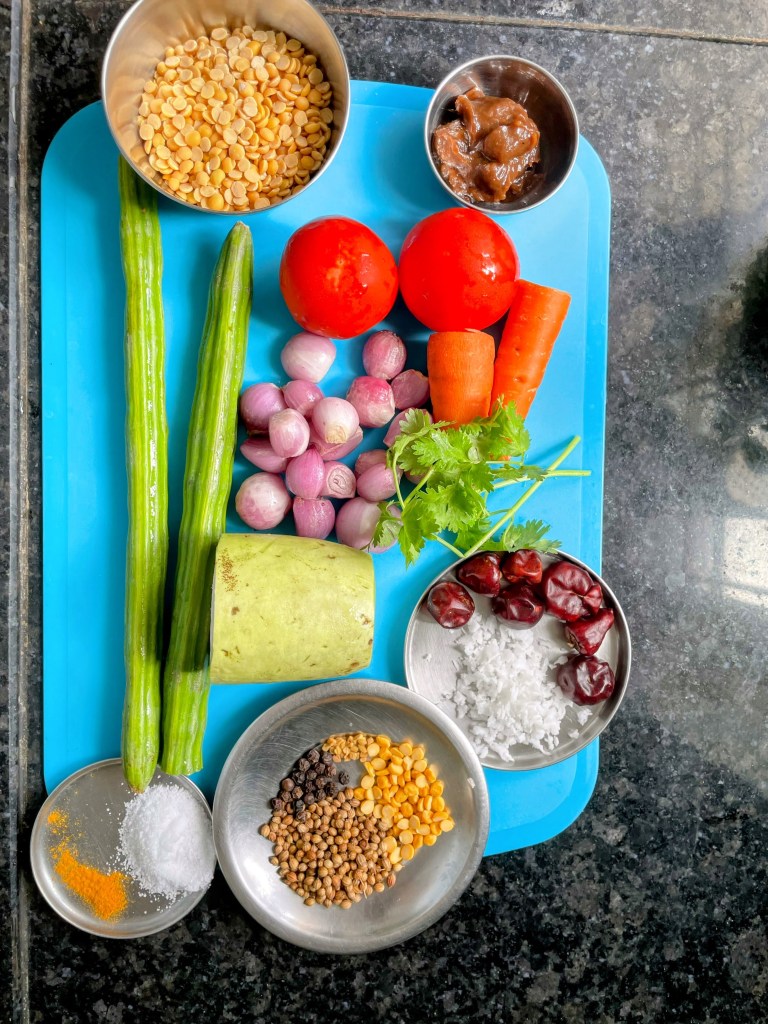
- Tuar dal – 1/2 to 2/3 cups
- Vegetables – Shallots, drumstick, tomato, bottle gourd, carrots(opt), ladies’finger(opt)
- Tamarind paste – 1.5 tbsp
- Salt
- Turmeric
- Oil
- Garlic pods -2, 3
- Coriander leaves
- To grind
- 1/2 tsp chana dal
- 1 tsp coriander seeds
- 10-12 pepper corns
- little methi
- 6 to 8 red chilly (depending on its spiciness)
- 1 tbsp coconut grated
- Season
- 1/2 tsp mustard
- 1/2 tsp methi
- 2 red chilly
- Hing
Method:
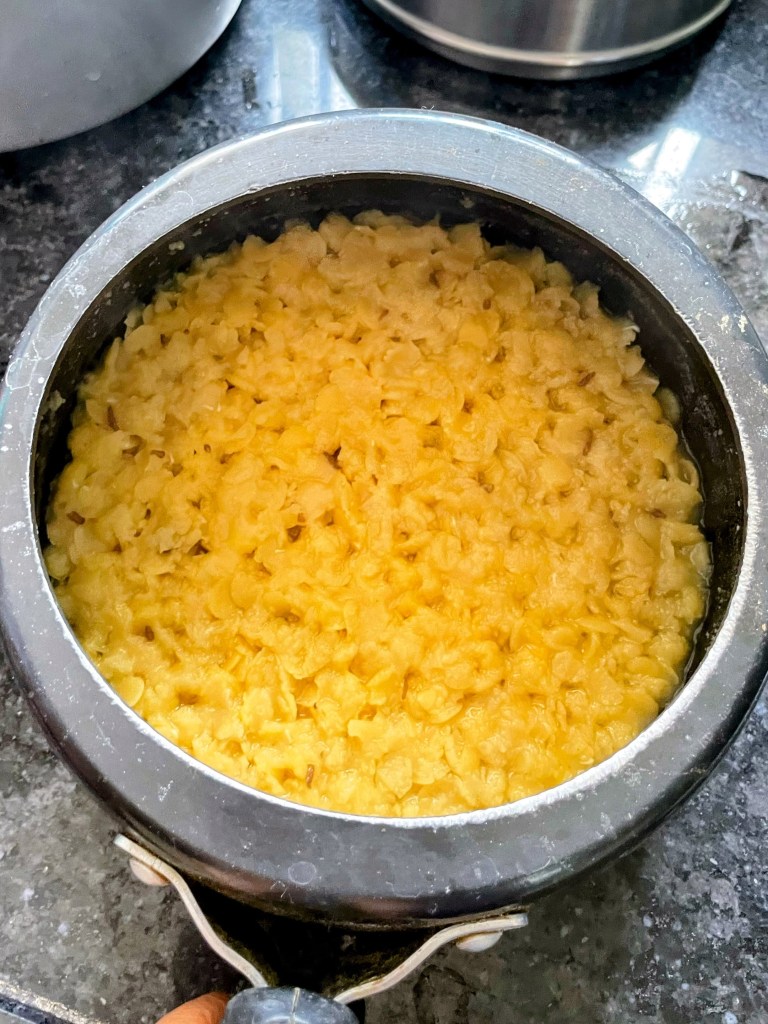
- Wash tuar dal and cook it till soft in a pressure cooker adding 2.5 to 3 times water.
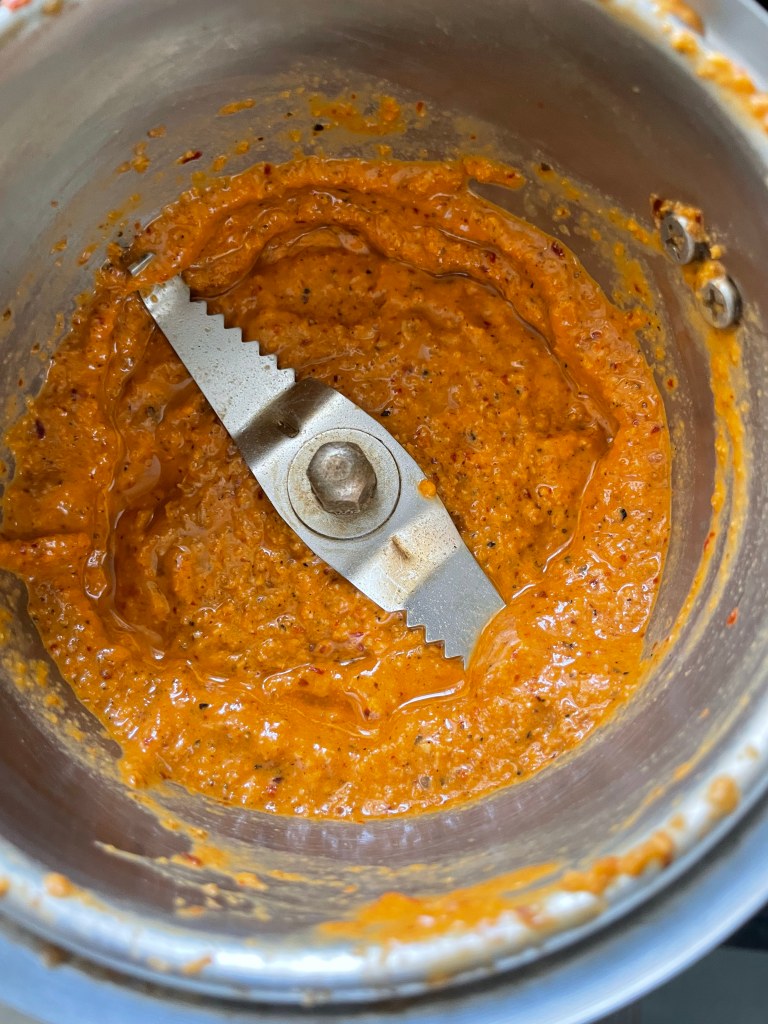
- Heat 1/2 tsp oil and roast the ingredients listed under ‘to grind’ except coconut, and once cooled grind along with grated coconut to a smooth paste.
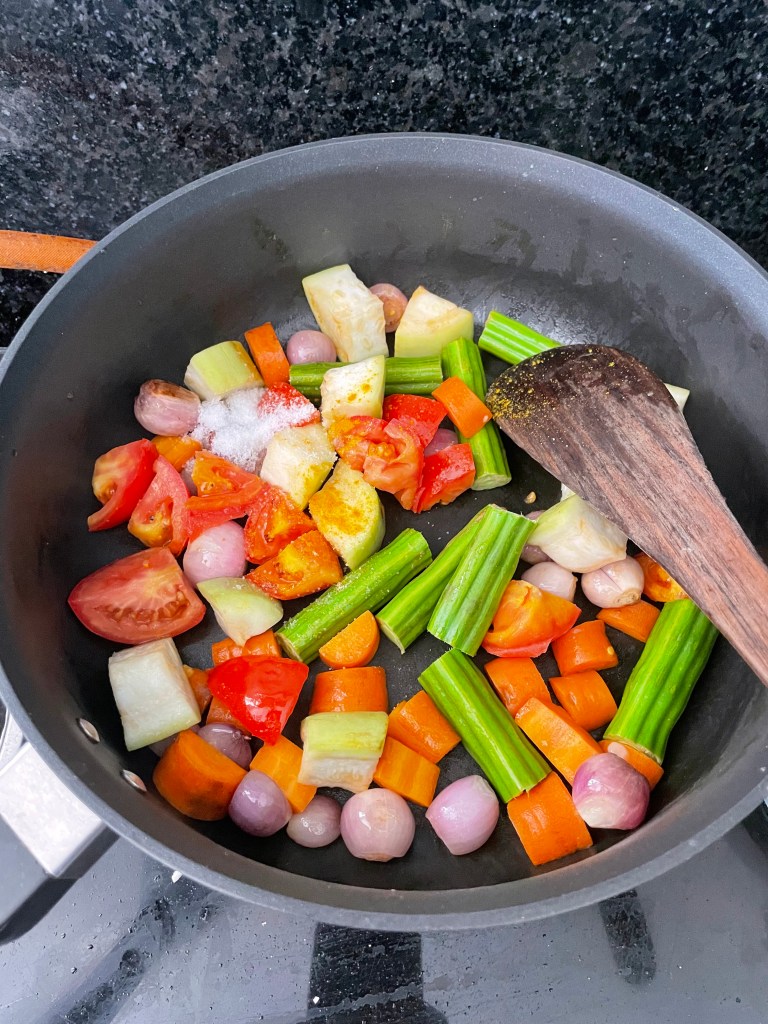
- Wash and cut the vegetables into slightly big pieces.
- Heat a tsp oil in a pan and add shallots first, tomatoes and other vegetables and saute them for 2, 3 minutes.
- Add water to it or transfer them to another vessel of water and cook adding turmeric and required salt. Partially cover with lid and cook till they are done but not too soft.
- Add tamarind juice and boil for couple of minutes.
- Gently mix the cooked dal and add it to the boiling liquid and cook for two minutes.
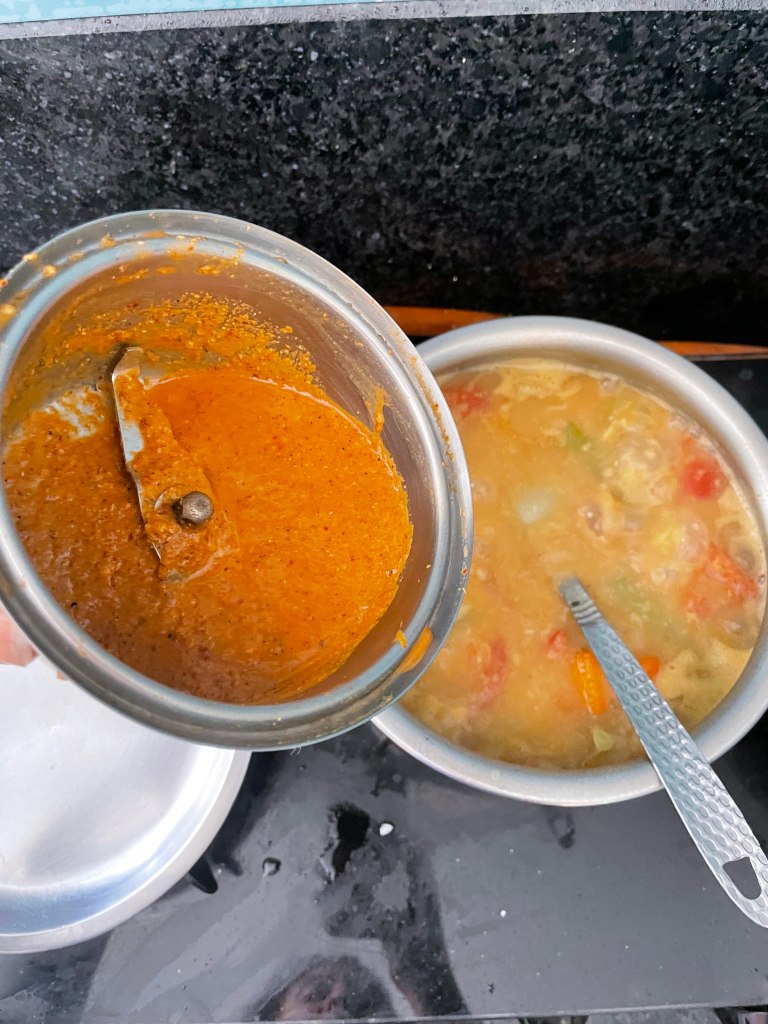
- Now mix the ground paste and let it boil for a few minutes.
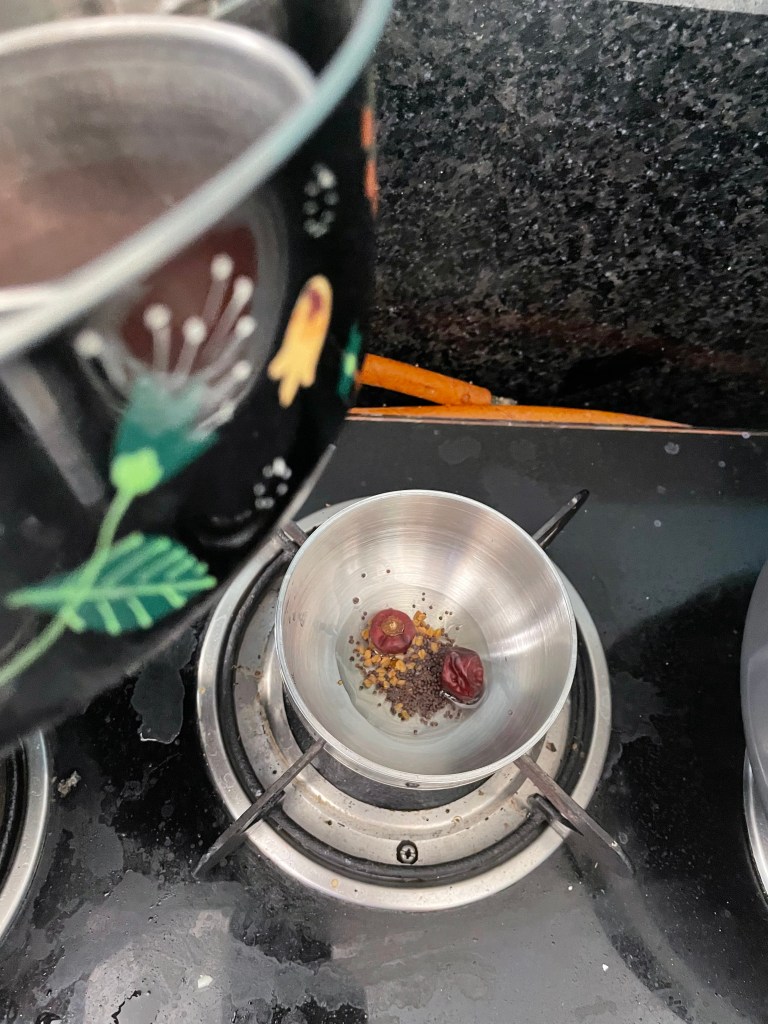
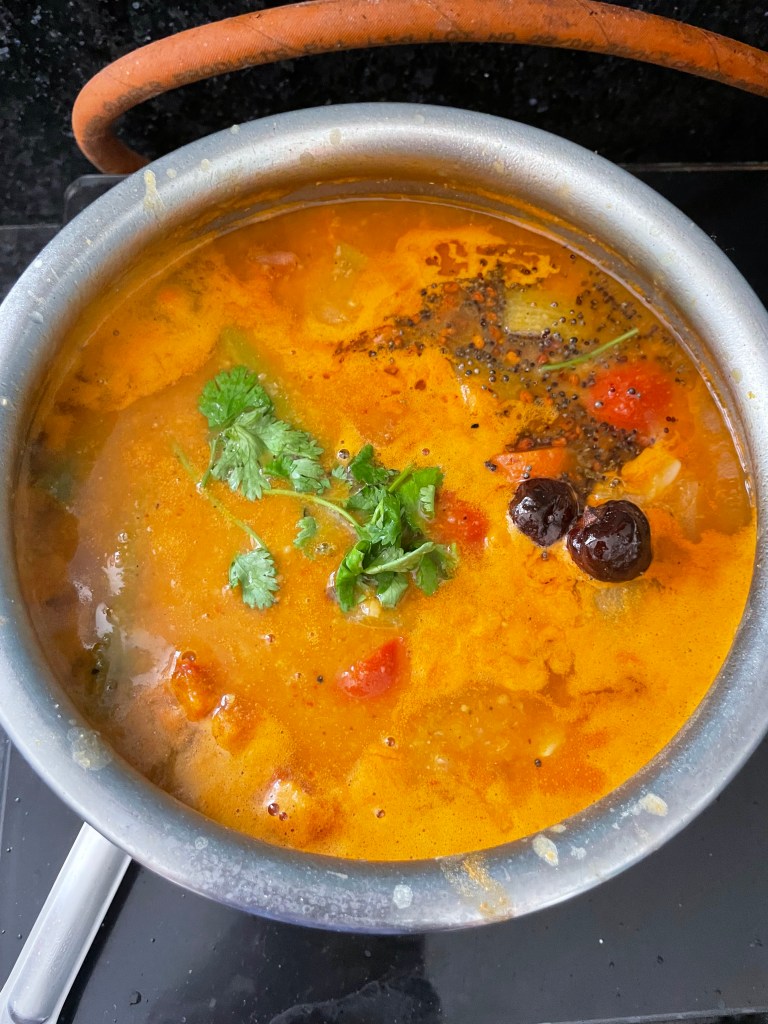
- Do the seasoning and add it and coriander leaves.
- Now lightly crush the garlic pods with a pestle and add it to boiling sambar, cover and switch off the stove.
Notes:
- Soaking tuar dal for half an hour helps in cooking evenly and faster.
- Tomatoes are a must, shallots or onion and drumstick enhance flavour. Bottle gourd is also a must in Andhra sambar.
- Shallots or onion alone are used to make sambar (even in my TeluguTamil style) and it is very popular as flavorful vengaya sambar.
- Similarly drumstick alone along with shallots and tomato can be added to sambar.
- In Tamilnadu generally only one vegetable is used for sambar. Shallots and tomato a must in any sambar, additionally brinjal for kathirikai sambar, ladies’finger for vendakkai sambar, drumstick for murungaikkai sambar etc.,
 A Spring in your Step