
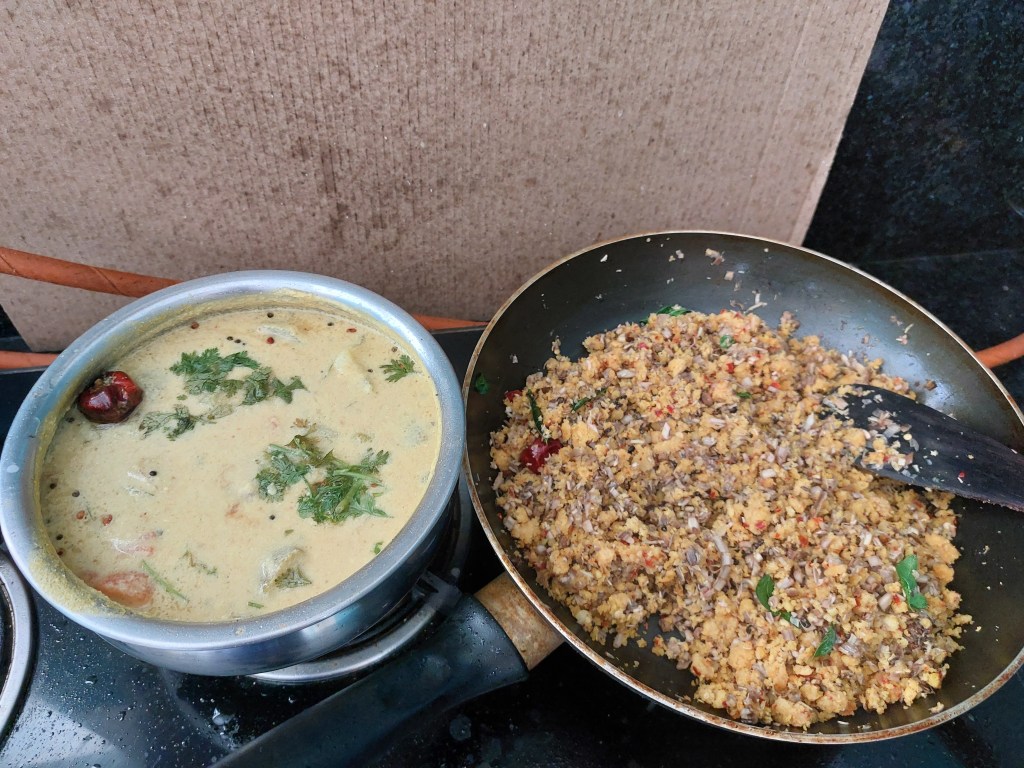
Majjiga pulusu is a classic gravy that can transform a simple meal into a rich and special one, when teamed with mudda pappu or pappu kura and hot rice, with an appadam or odiyam and challa mirapakaya, with a drop of ghee.
Ammamma’s majjiga pulusu used to be a very looked forward to dish, though she made it quite often. She always used to churn her buttermilk and remove butter from it for preparing ghee. Even with butter removed, majjiga used to taste so good. Without using a refrigerator she used to work magic in keeping it fresh and not sour at all (‘kammaga’) for the meals. As I mentioned in another recipe (Challa punukulu) her majjiga preparation is a ritual.
After using the milk for morning coffee, she would light a ‘kumpati’ (a coal stove) which will have a very low flame and put the (large) vessel of milk on it and let it boil for some time. I dont know/remember how long she left it to boil, she would eventually take it off the kumpati and allow it to cool. Then she would curdle it in two categories – a large portion for the next day and a little for that day’s dinner.
Each morning just after breakfast, water is added to that day’s curd and it is churned using a long wooden churner (‘kavvam’). When I was living there, I was given that duty. Somehow I was quite eager to do that and also help her with other prep work without grudging, though I had other interesting tasks, hobbies to engage me, like books, singing, going here and there and I never got bored while in Kakinada, at least for several months in one go.
Anyway, coming back to buttermilk churning, though I was eager, I used to be impatient. Buttermilk would initially froth and slowly begin to separate into small masses of butter, taking time to collect together into a single lump. I used to stop every now and then and ask ammamma if it is done and she would take a look and say churn some more and I would continue with aching arms. Finally when done, she would take over and remove the butter skillfully and store it (for making ghee after collecting thus for few days). My reward was a sizable lump of butter placed in my palm to lick and enjoy. I can still recall the goodness of soft butter sliding down my throat 😋
Then segregating her majjigas(buttermilk) into several categories – after using that day’s fresh, thick buttermilk for that lunch, remaining is stored away except for a small amount that is mixed with evening’s curd and made into thin majjiga. For 2, 3 days this majjiga is collected in a vessel. After that if she plans majjiga pulusu or menthi majjiga it is used up. Else it is transferred into another vessel and kept aside and the remainders are stored again. Older majjiga is used for challa punukulu or challa atlu(dosa). None of the majjigas develop mold or get spoilt.
At home in my childhood, Amma also used to churn buttermilk but my sister or I rarely did it. She used to manage it along with her million chores 😟 Her style was similar and also different as we needed more buttermilk and ghee as we were school-going children. We used to have buttermilk at least thrice a day. Morning breakfast was always some tiffin followed by chaddi annam (previous day’s leftover rice) with majjiga. It was a mantra – a must for kids those days as leftover rice was believed to be a superfood. Amma would purposely prepare more rice for dinner so that enough is left over for the next morning. Then buttermilk/curd for lunch whether in our tiffin-box or eating at home and again for dinner. So she would supplement her buttermilk reserve by buying a portion from lady vendors who would bring curds (they had different categories too – from solid to watered down!) in a cane basket that they carried on their heads for selling every morning.
She also prepared majjiga pulusu and menthi majjiga (for dinner) periodically. I used to like menthi majjiga more. Anything light was better for me as eating was a least liked task back then ☹️
Majjiga pulusu tastes great with anything and is heavenly with the right combination as listed in the beginning. It gets better as it rests more and develops little more sourness. My husband’s favorite, also son likes it.
Ingredients:
- Buttermilk (somewhat sour) – 3 or 4 cups (churn curd into smooth and thick buttermilk)
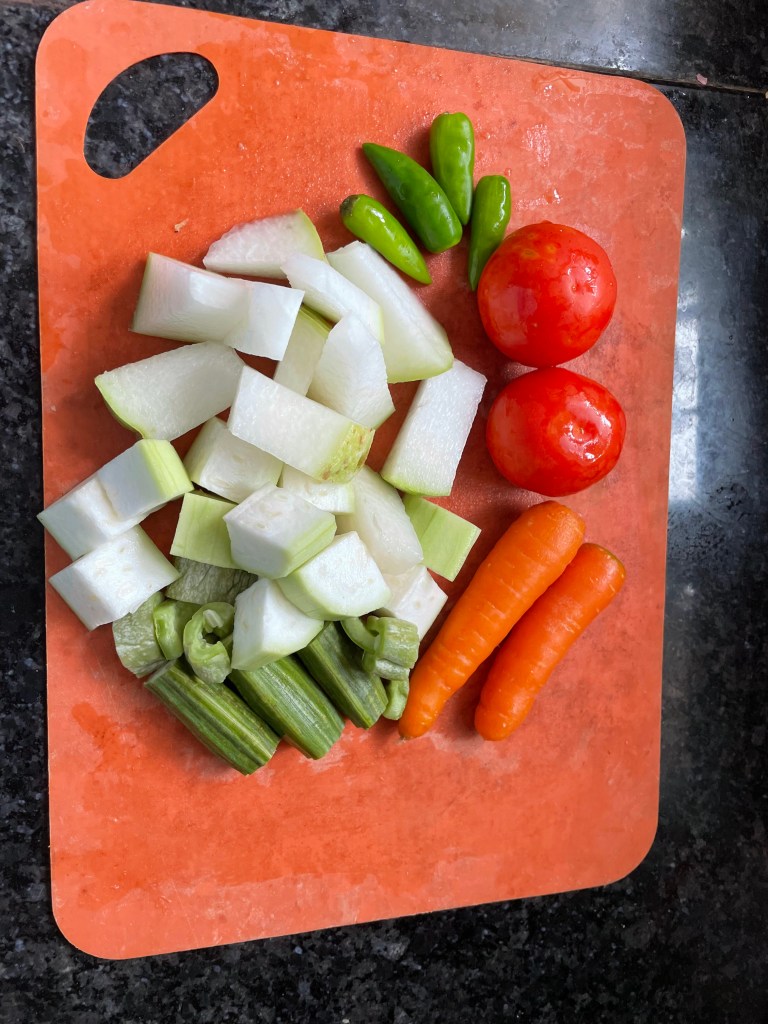
- Vegetables – Bottle gourd, drumstick and tomatoes must, ash gourd, carrots, ladiesfinger, brinjal any or all, cut into big pieces
- Green chillies – 5
- Chana dal – 1 tbsp soaked for 2 hours
- Coriander seeds – 1 tbsp soaked
- Ginger – a small piece (1/2 inch cube)
- Coconut grated – 2 tbsp
- Curry leaves – few
- Coriander leaves
- Ghee (or oil) – 1tbsp
- Salt
- Turmeric – a pinch
- Mustard, methi 3/4 tsp each, hing, red chillies 2 for seasoning
Method:
- Grind coconut, chana dal, coriander seeds and ginger into a smooth paste and mix this well with the prepared smooth buttermilk along with turmeric.
- Heat this in a low flame stirring so that it doesnt curdle. (If we stir when it begins to froth at the corners, it will smoothen.) After sometime it starts boiling and rises up like milk. Switch off the stove, adding curry leaves.
- In parallel gather all the vegetables in a vessel, add water, salt and turmeric and cook covered.
- When the vegetables have cooked, add the boiled buttermilk mixture to this and mix well.
- Let it boil together for a few minutes. (Many recipe writers say it should not be boiled as it might curdle, but in our school and my experience, if we see that it doesn’t break until the initial boiling over (step 2), it will be intact after that even when boiled with vegetables for some time)
- Heat ghee and or oil in a seasoning pan, add the seasoning items and make the tadka and add it to the majjiga pulusu.
- Sprinkle coriander leaves and keep it half covered, letting the steam escape and not add moisture to the pulusu.
- Enjoy it hot with hot or even cold rice and roasted or fried appadam.

Note:
- Homemade curd is the best for this. Though both the packaged milk we buy and direct curd may have milk powder or other substance added to meet standards or profits, homemade blends smoothly whereas branded curd despite being thick will have some particular texture. Here I have used 80% packaged curd and 20% homemade. You can see the texture is not all that smooth. Taste-wise I feel both are same.
- More often at home, from ammamma’s time we actually prepare this in a simpler way that tastes as good. Instead of grinding coconut, chana dal etc, mix 2 to 3 tbsp of besan (senaga pindi) in water and blend it with buttermilk and heat this slowly until it rises. Rest is the same. We can add little coriander or rasam powder along with besan.
- If ladiesfinger is used, it is good to saute the pieces in a drop of oil until they brown a bit and then add it to pulusu ao that it retains its shape and structure.
 A Spring in your Step