
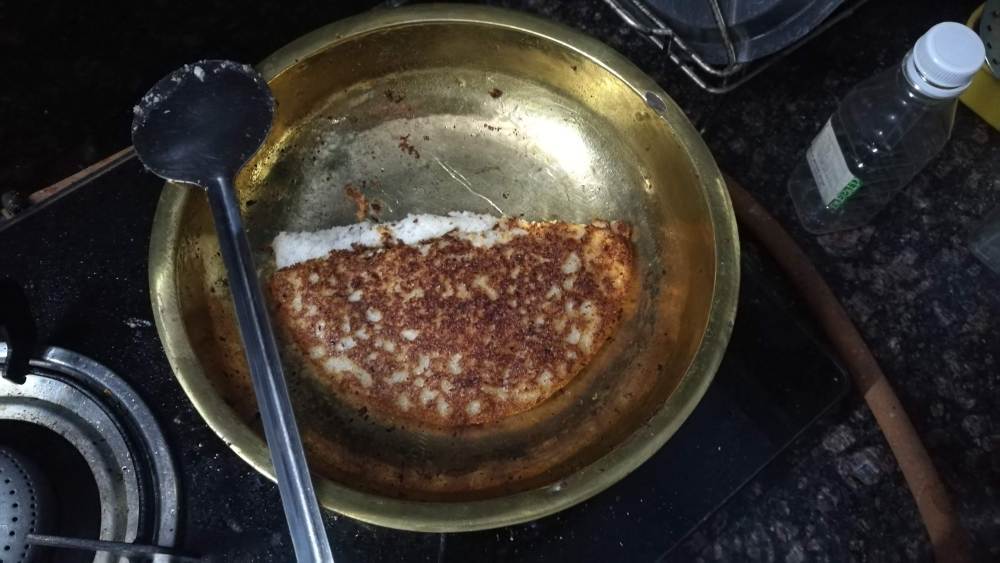
It is a simple, very popular item for dinner and much favored travel food in Andhra. With a beautiful deep golden crunchy thick crust and soft interior, it is appetizing and filling. It is made as huge rotti/pancake on large mookudu or thick brass wide mouthed vessel. It is then sectioned into quarters or smaller portions and served with avakai or bellam paakam (jaggery syrup) or sometimes coconut pachadi. It tastes yummy when hot and also almost as good when cold, packed during travel.
I was not a huge fan of this in childhood but later it earned its delicacy status in my kitchen. Amma and ammamma used to prepare them on Saturday nights.
In our childhood only one or two nights people had tiffin items as dinner and all other days only rice with a vegetable stir fry and or pachadi, chaaru(rasam), buttermilk. The tiffin nights were as sort of semi-fast for some God – like Saturdays for Lord Balaji, Thursdays for Saibaba. Not eating rice was considered a great abstinence. But they overcompensate actually, by preparing nice items like this, koyya rotti, pesarattu, vada, poori, pindi pulihora etc when there are many (adult) members doing this ‘semi-fast’ . Upma and uppu pindi were the real plain ones in their scheme.
Children weren’t allowed to do this saying it wasn’t healthy for young children. As a kid I had a distaste for rice and tiffin items were better liked. Most children relished tiffins more than rice. So we used to feel it was very unfair that the adults were enjoying a tastier fare – even upma or pindi. Of course, we were also served a small portion, but along with the main course – rice.
In the last 2 decades people shifted to chapati and other tiffin items every night. I didnt favour rice for the nights and liked having a light tiffin like dosa, upma even in the period before that transition and I had to invent reasons to have tiffin – for this God or that to pacify close family! I dont prepare this exact dibba rotti much. The slightly modified version of idly batter made into single serving smaller rotti is an often made favorite, even with my son.
Sometime back my son asked for dibba rotti very unusually. In my current state of rapidly growing forgetfulness, I couldnt recollect if we should ferment the batter or use it right away, not having made the original dibba rotti in a while. I made the original and it seemed quite hard to me though he said it tasted good (I didnt taste). I felt very guilty about it.
Both the versions – fermented and fresh exist in different schools apparently. Anyway he seemed to have meant the idly batter rotti!
Ingredients:
- Whole urad – 1 cup
- Raw rice rava – 2 cups
- Cumin – 1 tbsp
- Salt
- Oil
Method:
- Wash and soak urad dal and rice rava separately for for 4 hours.
- Grind urad in a mixie grinder to a smooth paste like for idly.
- Squeeze water from rice rava and mix with urad batter to a consistency similar to idly batter.
- Mix salt and jeera and keep for half an hour. (Our school uses unfermented method)
- Heat the kadai with liberal amount of oil and when hot, pour few laddles of batter and spread it to 2 inch thickness.
- Again add oil liberally around the rotti, cover with a lid and let it cook in low flame.
- Check the underside by slightly lifting an edge with spatula. If it has browned enough, turn it over to the other side. Add some oil (if possible before the rotti is placed back) and let cook.
- Once the under side has browned, remove.
- This is served with jaggery syrup or coconut pachadi. Best is with avakaya.
Note:
- Olden days they were some eight inches diameter and four inches in the middle! Also they made in vessels(ginne) and they are called ginne rotti.
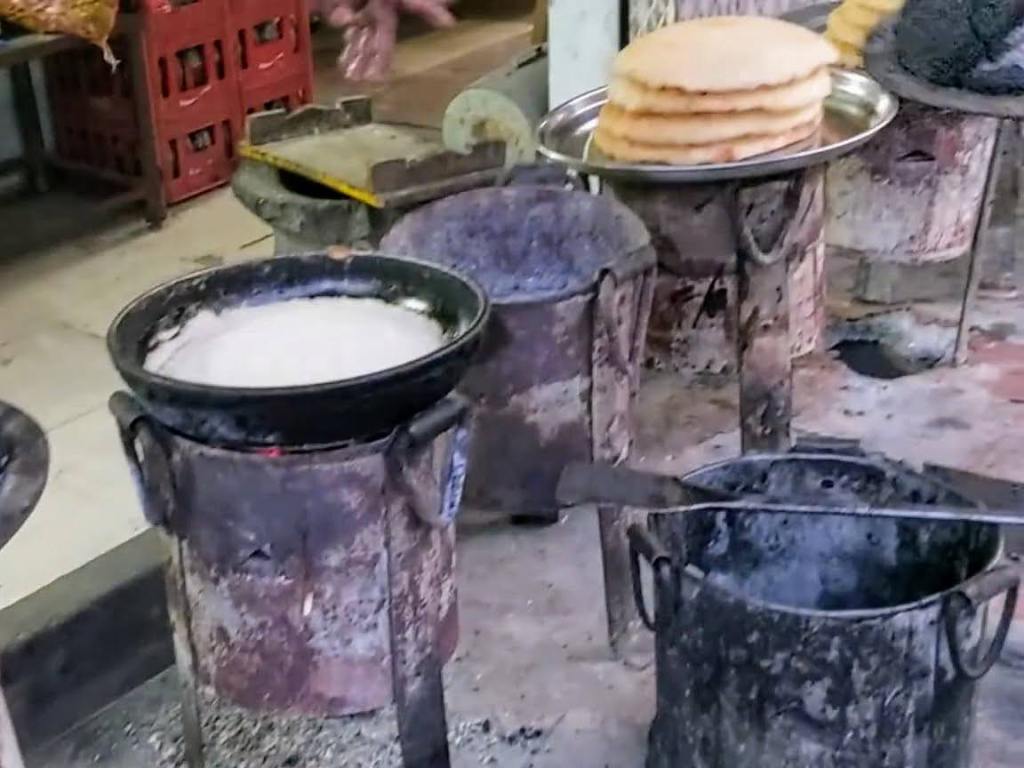
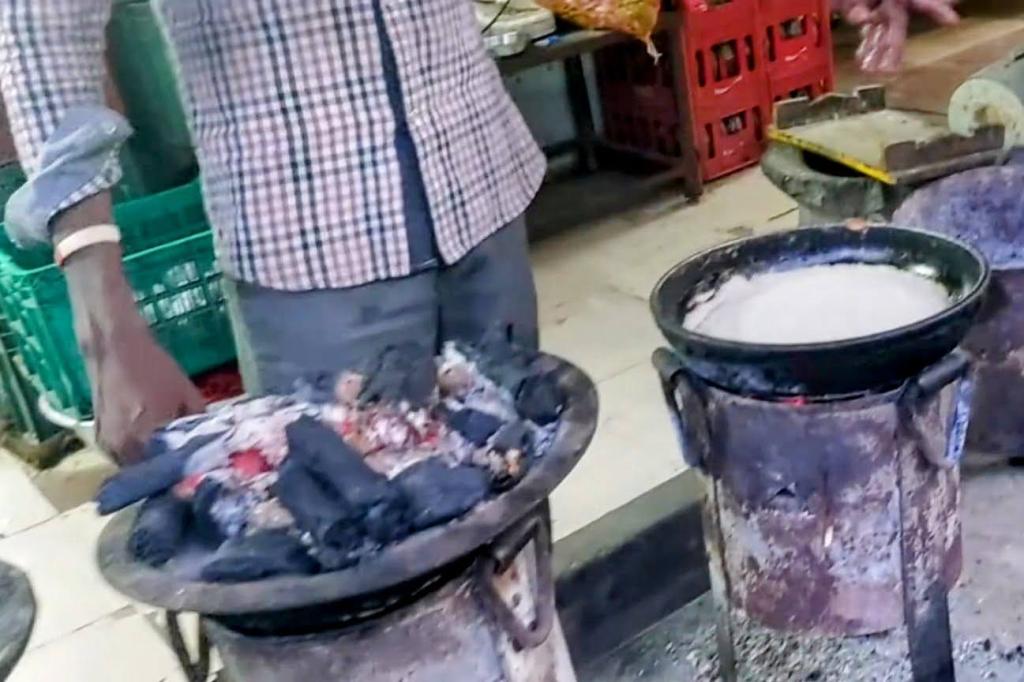
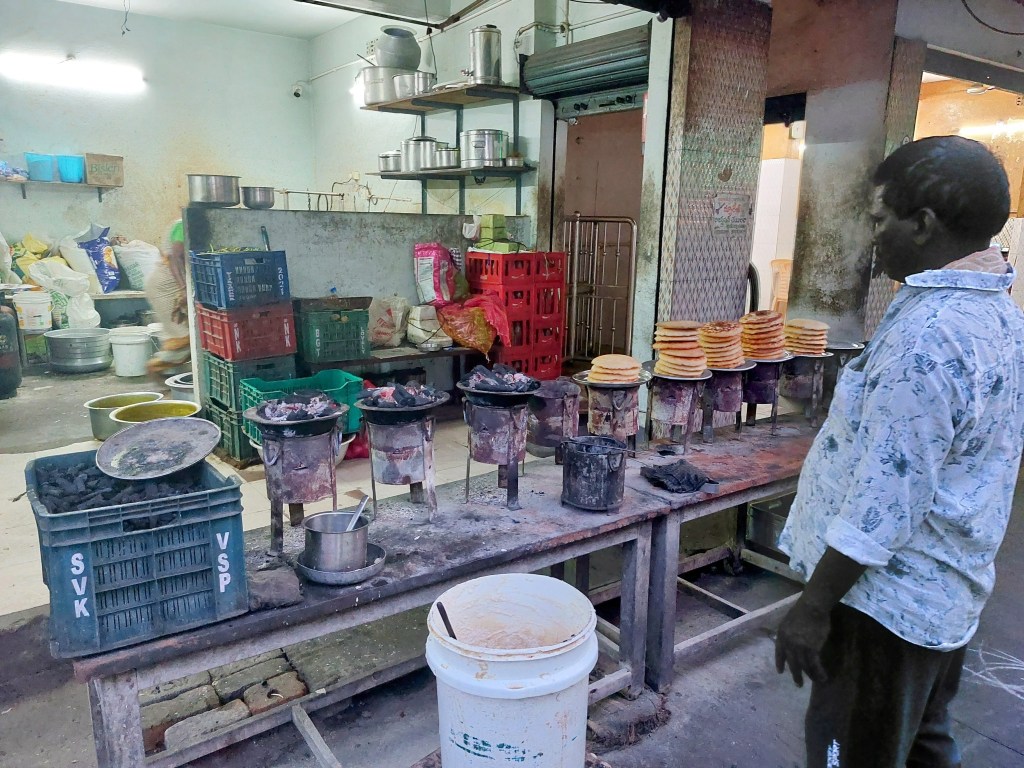
- Some towns in Andhra are famous for roadside dibba rotti. Palakollu is one such town. They make them atop coal stoves. After pouring the rotti and covering, they place hot burning coal pieces on the lid to heat it on both sides simultaneously. That is the traditional method from olden days, I guess.
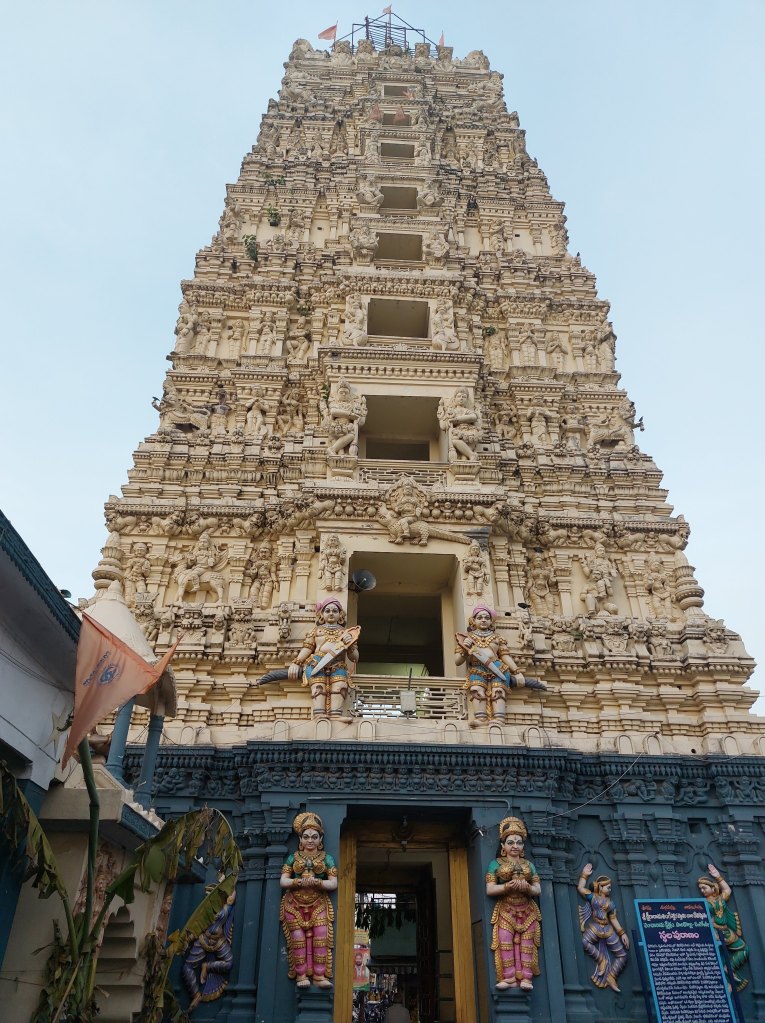
Ksheera RamaLingeswara Swamy Temple, Palakollu
 A Spring in your Step