
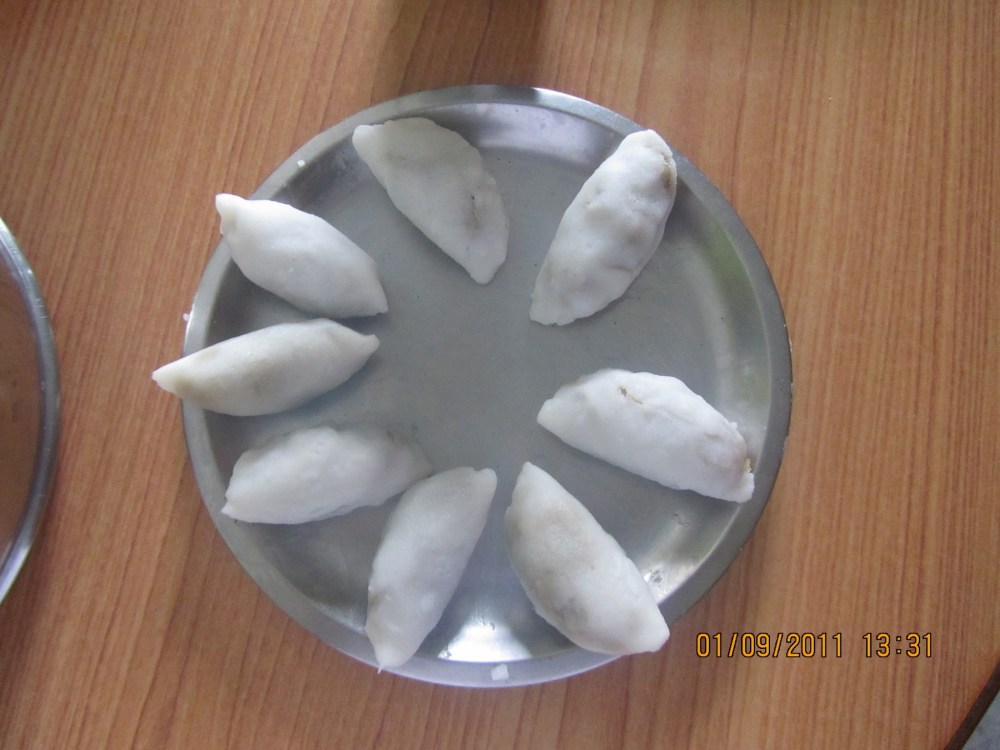
Most popular naivedyam offered to Lord Ganesha for his puja, especially Vinayaka chavithi (Ganesh chaturthi). These sweet dumplings look delicate and taste delicious. The outer steamed rice dough covering with a tinge of salt balances the sweetness of the inner sweet coconut to just the perfect taste.
Jilledu kayalu are popular all over India by different names – aka kudumulu, poornam kudumulu in Andhra, (sweet) Kozhukkatta(i) in Kerala and Tamilnadu, Modak in Karnataka and rest of India with slight variations in shape and ingredients used in the inner stuffing, but generally all use cooked rice flour covering and coconut-jaggery stuffing.
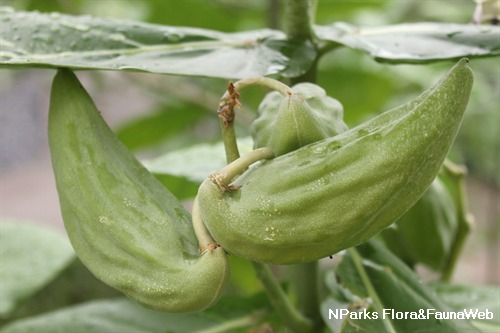
Jilledu (Calotropis) flowers are Ganesha’s favourite, along with numerous other leaves and flowers he seems to like as elephant God. Apparently jilledu fruits are ellipsoid in shape and fleshy and split open from one side, which is why this dumpling is named so. Jilledu milk is poisonous though.
In our childhood this festival was very special (as were the others ☺️). First it was a holiday, then new clothes and the special food treat, which every other festival has too. What was extra was that we were included in the puja wearing separately rinsed and dried clothes called ‘madi battalu’ and also our role in buying the Ganesh idol for puja. We would accompany Nannagaru early that morning to select the Ganesha – a painted one and another still wet mud one. Also early morning parijatam flowers collection from the house next to ours, competing with others.
Amma would prepare for the puja with all items needed including madi clothes and guide us behind the scenes in doing puja which would be presided by nannagaru and multiplex special food preparation – undrallu, jilledikai and routine food. Those days I didnt have much appetite or interest in regular food or even festival specials particularly sweet items. I used to enjoy evening snacks, again quite limited quantity (how nice!!! I used to be ver….ry thin 😌) So though I fondly remember the day’s significance, dont much remember enjoying jilledu kayalu.
Later in my family I did pretty much what amma did as my in-laws were quite traditional, including madi clothes. By now I acquired a mindset which remained with me to date, of following the age-old customs as much as I can, to carry the tradition forward into my generation and pass it on to anyone with similar inclination.
Husband and son did the puja while I prepped for them and also cooked the specials. Now there came a reversal in my preferences from childhood – I wanted a break from puja and also started liking food – eating and making. Genes..? – my son wasn’t particularly interested in food, though he ate without complaining almost everything our families prepared but didnt much prefer snacks or even festival specials. This was a big let-down for me as I got passionate about cooking and cooked a variety of dishes in large quantities. He hardly touched anything. But on Ganesh chaturthi he used to eat these jilledu kayalu and undrallu with relish. Secret? – fasting for puja upto 11 or so made him hungry!
This year’s puja was also celebrated nicely today, thank Ganesha 🙏

📝Ingredients:
- Rice flour – 1 cup
- Water – 1 1/2 to 2 (depends on flour)
- Jaggery – 1 cups grated/powder
- Coconut grated – 2 cups
- Salt – 1/2 tsp
- Elaichi – 6 pods powdered
- Ghee – 1 tsp
- Oil – 1 tbsp (or boiled and cooled) water.
👩🍳Method
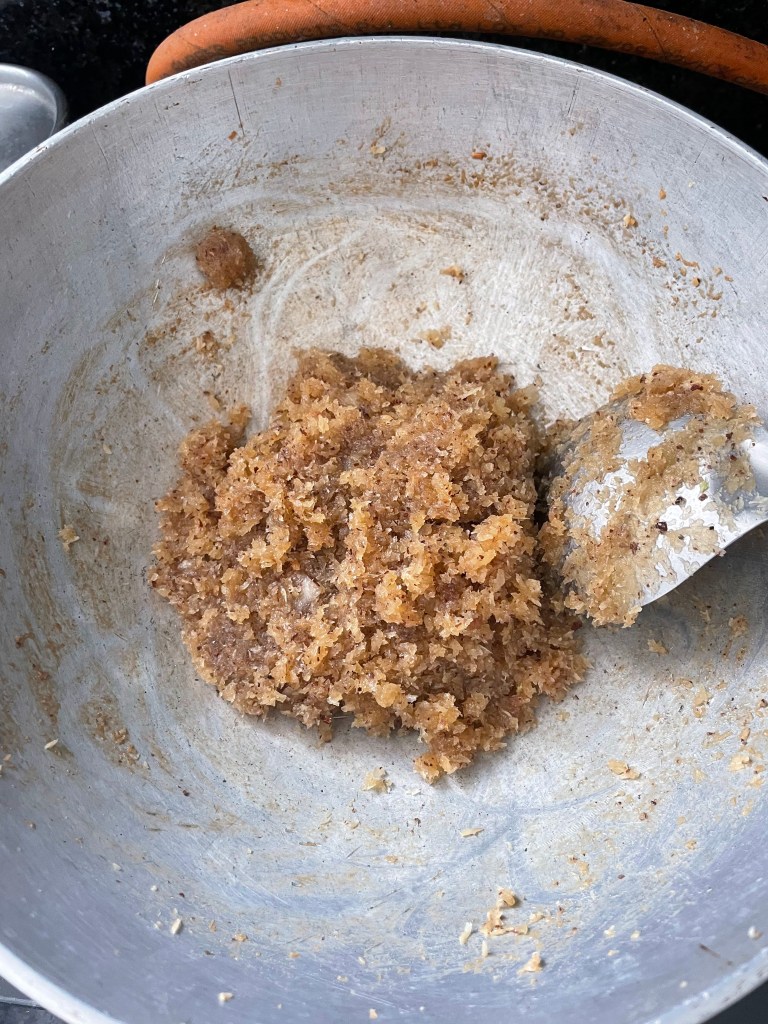
- Mix grated coconut and jaggery and heat it in a thick bottomed pan.
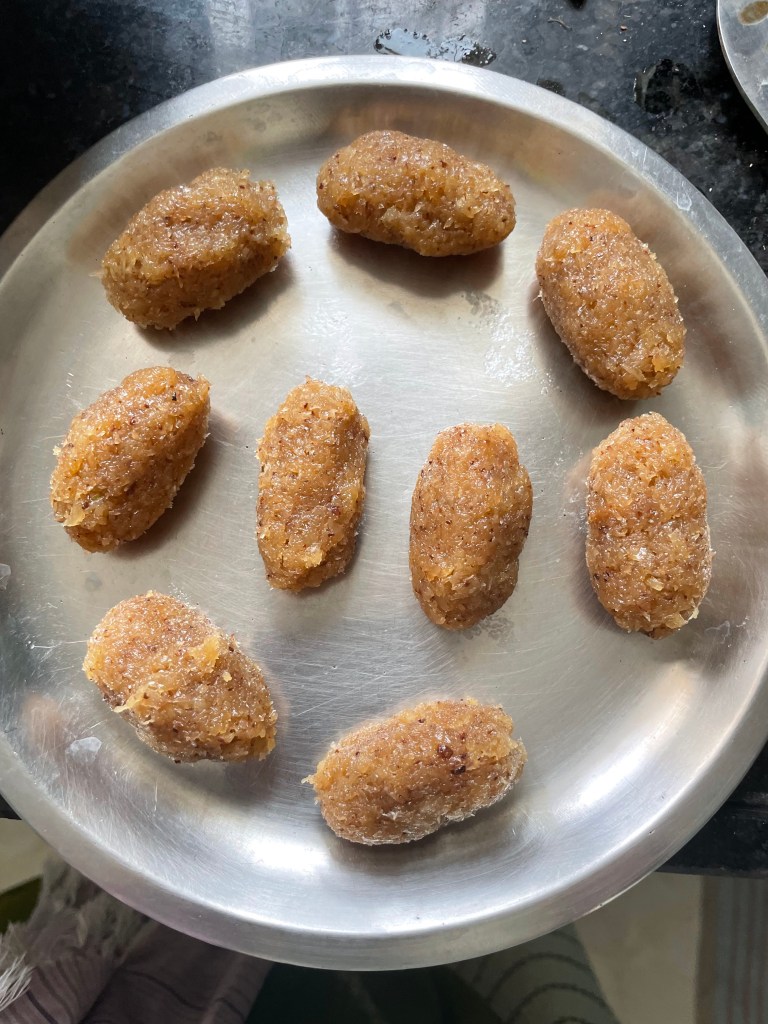
- Cook stirring till it comes together as a sticky lump.
- Add elaichi powder and ghee and keep aside to cool. This is called ‘Laskora’
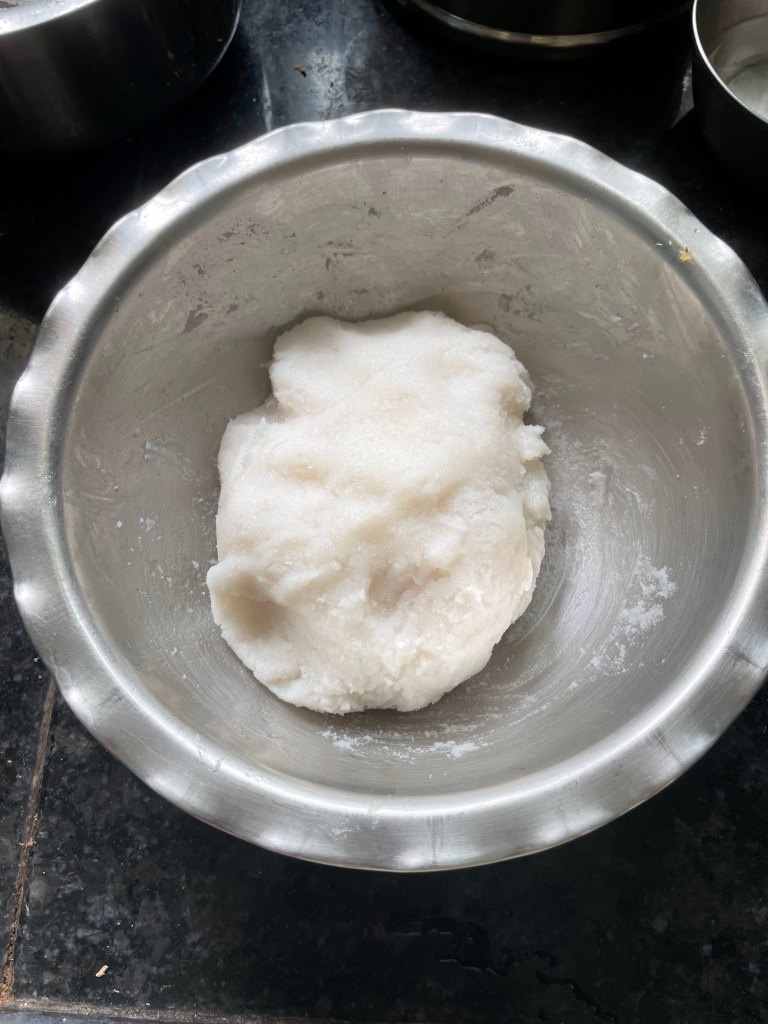
- Boil water, add salt and add rice flour slowly stirring it in. (It quickly becomes a lump.)
- Let cook for a minute and remove from heat.
- Cover and keep aside until it is lukewarm to touch.
- Knead this dough well applying a little oil or ghee to hands.
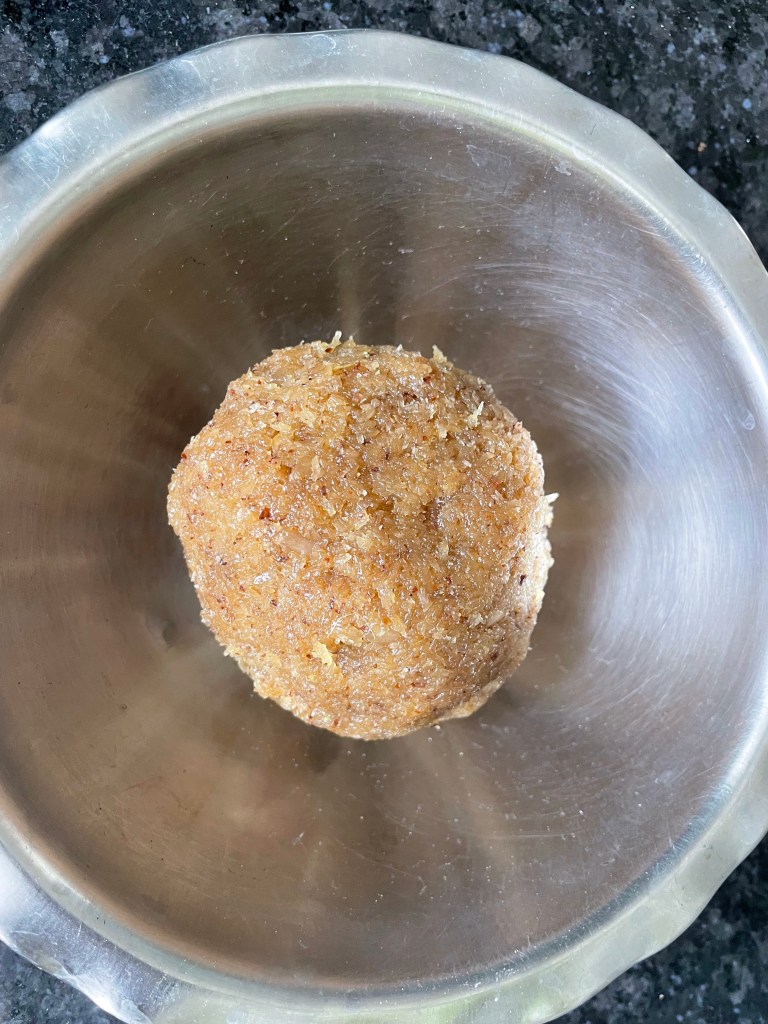
- Make small oval balls of laskora by pressing it in a fist.
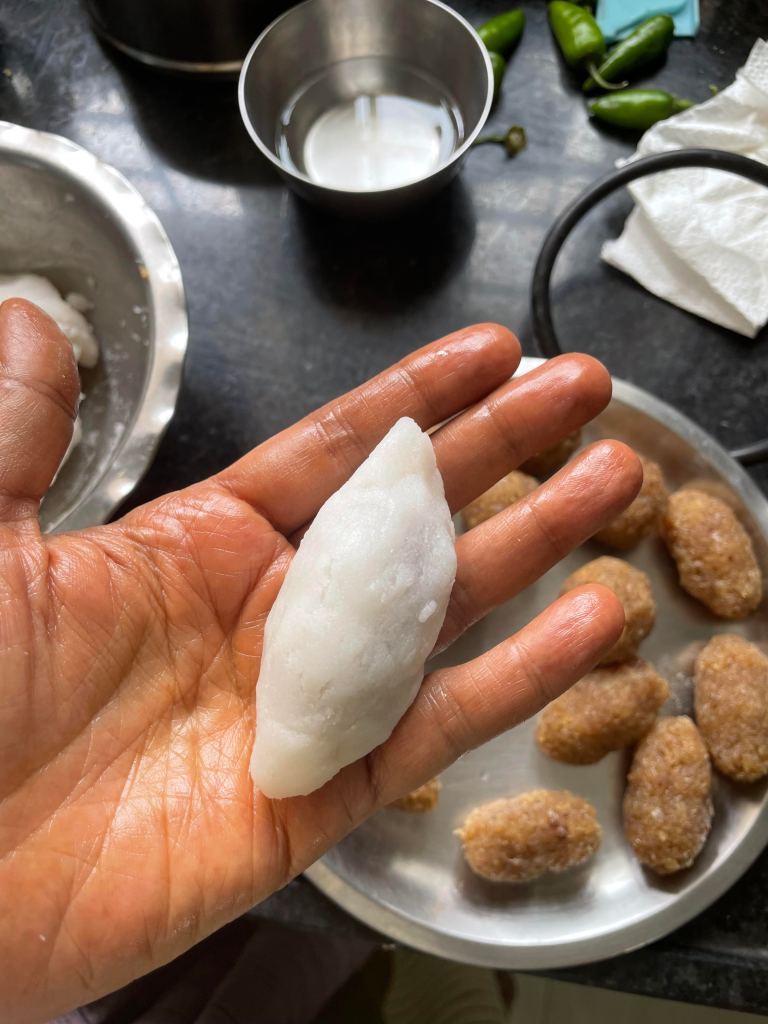
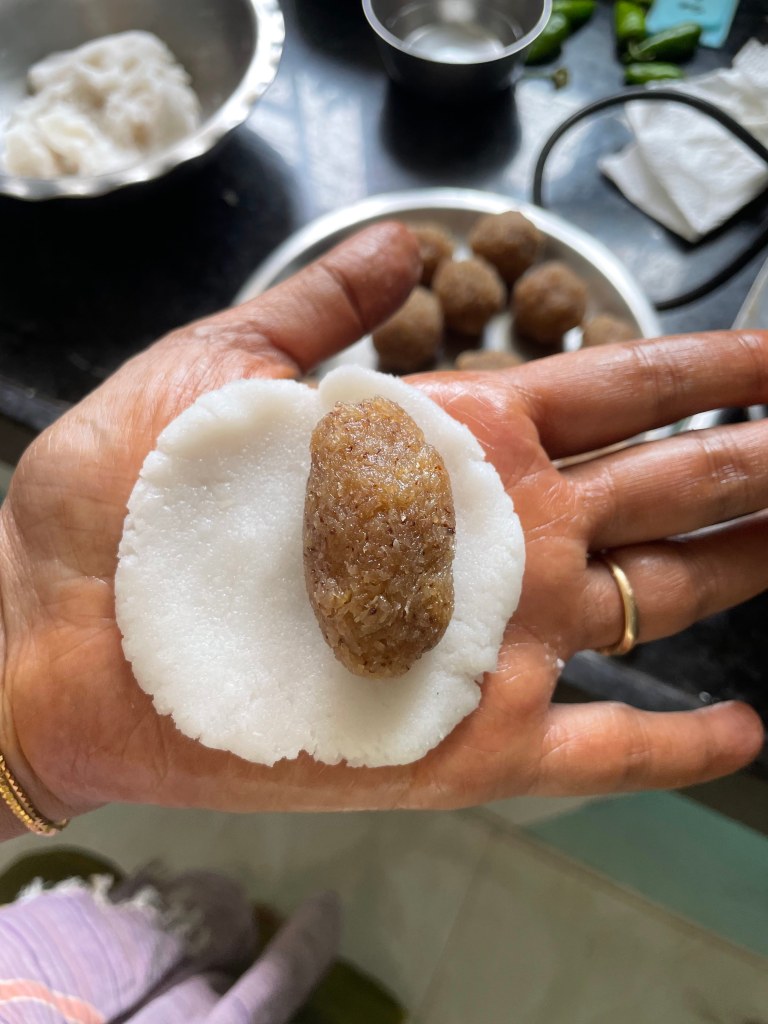
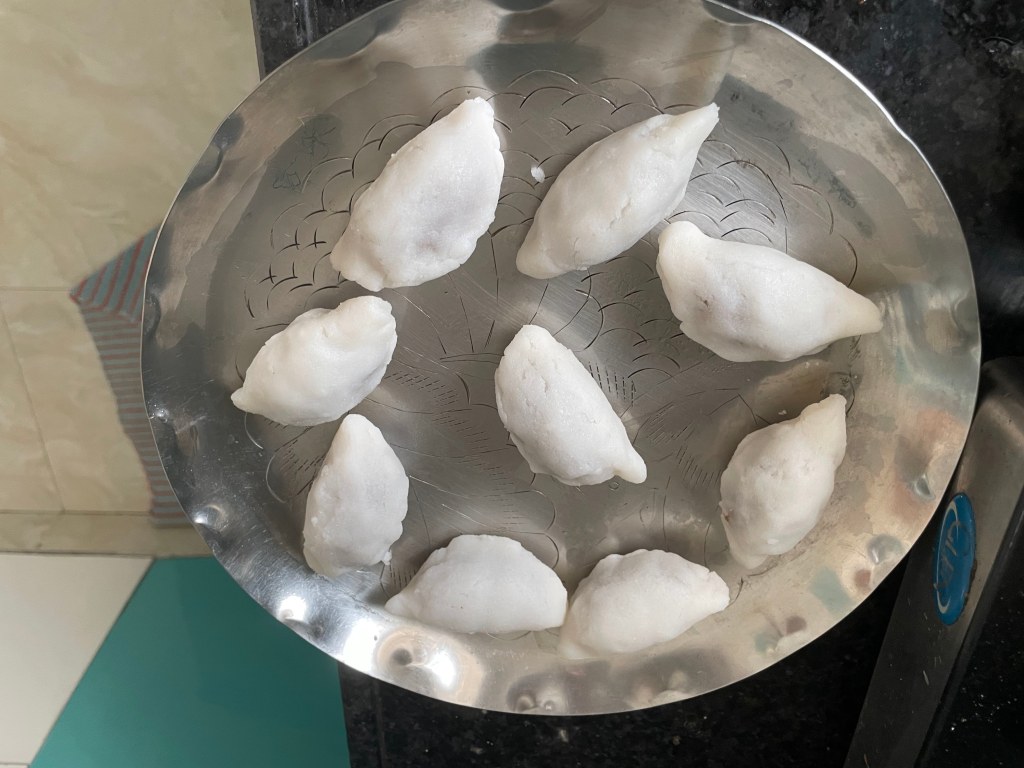
- Take slightly bigger ball of dough and applying a little oil on a plastic sheet or your palm flatten into 1/8 inch thin disc. Place the laskora ball in it and carefully join the edges together to form a semicircle. Seal the edges nicely using a drop of water.
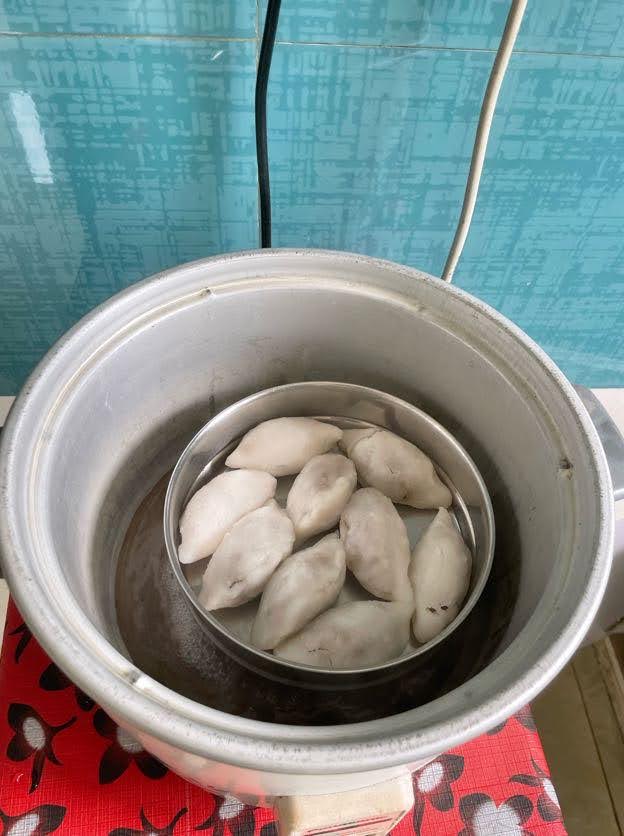
- Prepare a set of jilledikayalu like this and steam them in idli pot for 10 minutes.
- Remove and offer to Lord Ganesha and savour them.


Note
- When we prepare laskora or stuffing, just cook till it becomes slightly lumpy. If you cool a little and roll it (see first pic), it should stay and not spread into pieces. We should stop cooking a wee bit earlier than for regular laskora. Since this sits inside the covering it bites nicely if it is not a hard ball.
- If the dough is cold and not yielding, warm it a little and try.
- I like the covering to be thin. Some people make it thicker, which may not crack so much.
- Do not use too much oil while flattening and forming the shape as it doesn’t taste good with slight bitterness.
 A Spring in your Step