
Thoughts on Relativism
As I struggle to single out the one item from the countless flashing ideas for my first blog post, there is the strain of conception and the pain of labor. Identifying the seed that will lead to the best genesis, developing it with utmost care and finally delivering the brainchild.
Well, this one is my favourite and may be the candidate for the firstling. Notion of relativism. Deeply philosophical but I will just touch upon it very lightly (for fear of getting lost in the maze!). I tend to think everything is relative. Which means nothing is absolute and I just leave it at that (relative value of the statement makes it paradoxical!). What is your stand? When it is all relative, even truth is relative, right and wrong, virtue and vice, good and evil, everything we think and say and do is.
From time immemorial, philosophers from Plato to Immanuel Kant, Bentham and Nietzsche, to modern thinkers like Jonathan Haidt, Sam Harris and Bloom have been debating questions of morality. Their very complex and totally differing ideas and the evolution theory that defines morality are immensely interesting topics. There is a wonderful course on Coursera titled ‘Moralities of Everyday Life‘ by Prof Bloom which I liked very much.
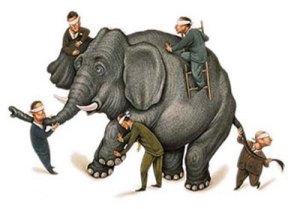
From a practical perspective the concept of relativism does not make life easy: it nurtures moral skepticism, maintains that all moral problems are unsolvable and permanent. Since it destroys the distinction between truth and belief, no one ever believes himself to be in error, everything is permissible. ‘Truth and reality are perceived differently from diverse points of view, and that no single point of view is the complete truth’ – ancient Jaina Anekantavada principle of Mahavira. (from Wikipedia)
Relativism is a deeply complex philosophical concept. My simplistic (relative!)meaning of the term is that: Differences in judgements exist across different people and times which means right and wrong or any such parameter is relative to that context.
How then is the notion of relativism going to be, as cultures merge and the strata overlap so that human lives are increasingly played out in the world as a single place (JA Scholte)? Which standards or framework to relate to?
Featherstone (1995): The process of globalization suggests simultaneously two images of culture. The first image entails the extension outwards of a particular culture to its limit, the globe. Heterogeneous cultures become incorporated and integrated into a dominant culture which eventually covers the whole world. The second image points to the compression of cultures. Things formerly held apart are now brought into contact and juxtaposition.
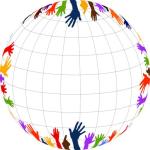
As a simple example, some food that tastes divine to me maybe repulsive to someone from a different culture. With globalisation how are we to qualify this food, relative to which benchmark? We cannot establish its merit without the relevant context. But as cross-cultural boundaries are disappearing and the world becomes a single place how is this possible? Can everything be judged, estimated by a single universal scale? There is no such single universally applicable moral, cultural standard. Globalisation and relativism are incompatible.
Anthropologists and psychologists maintain that with all the differences there are also moral universals like notions of fairness, harm, purity and community. Perhaps if a universal framework/ moral consensus that harmonises moral attitudes and sensibilities emerges with time, then everything will be relative in that framework.
If you want to delve a little more deeply take a look at this interesting paper: Globalization versus Relativism from which I have quoted some points.
 A Spring in your Step
A great first post. Keep doing the good work.
LikeLike